
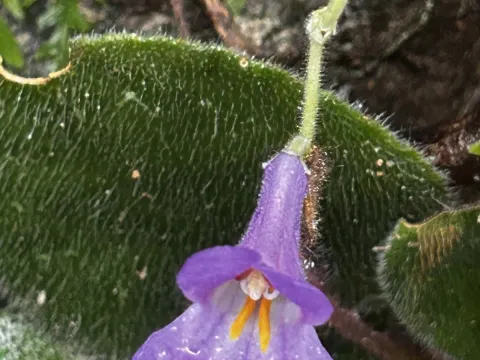
Primulina
Primulina Hance
Primulina (Primulina Hance) is a genus of herbaceous perennials belonging to the Gesneriaceae family. Originally found in the limestone cliffs of Southern China and Southeast Asia, these plants have adapted to thrive in specialized microclimates.
What the section contains

Primulina
Botanically, they are characterized by their basal rosettes and attractive tubular flowers, often appearing in clusters. The leaves are frequently textured or covered in fine hairs, exhibiting diverse patterns that make them highly sought after by collectors.
Regarding climate, Primulinas prefer steady temperatures between 18°C and 24°C. They do not tolerate extreme heat or cold drafts, requiring a stable environment to maintain their metabolic processes and floral development.
Soil requirements are centered on excellent drainage and aeration. A mix of peat moss, perlite, and a small portion of potting soil creates the ideal environment for the roots to breathe and develop without succumbing to waterlogging.
Agrotechnical maintenance focuses on precise irrigation. It is essential to water from the bottom or carefully at the edge of the pot, ensuring the water does not settle in the crown of the plant, which is critical for preventing tissue decay.
The primary threats to Primulina health are fungal pathogens, specifically those causing root and crown rot. These conditions are almost always linked to overwatering or insufficient drainage in the potting medium.
Common pests include mealybugs, which tend to hide in the tight spaces between leaf petioles and the crown. Spider mites also pose a threat, particularly in environments where air humidity levels drop significantly during winter months.
Managing disease involves strict adherence to drying cycles between waterings. Should rot occur, the use of systemic fungicides is required to stop the spread of infection to the healthy parts of the foliage.
Insects should be controlled using targeted insecticides or neem-based solutions. Frequent cleaning of the leaves and maintaining proper spacing between containers are effective non-chemical methods to reduce the risk of infestation.
Isolation of new plants for a quarantine period of at least two weeks is a best practice. This significantly reduces the likelihood of introducing common pests like thrips or mites into an existing collection.