
Dudleya
Dudleya
Dudleya is a genus of perennial succulent plants belonging to the Crassulaceae family. Native to the southwestern United States and Mexico, these plants typically thrive in rugged, rocky terrain and coastal cliffs.
What the section contains
 Anthony's Dudleya
Dudleya anthonyi
Anthony's Dudleya
Dudleya anthonyi
 Chalk Dudleya
Dudleya pulverulenta
Chalk Dudleya
Dudleya pulverulenta
 Dudleya albiflora
Dudleya albiflora
Dudleya albiflora
 Dudleya blochmaniae
Dudleya blochmaniae
Dudleya blochmaniae
 Dudleya brittonii
Dudleya brittonii
Dudleya brittonii
 Dudleya caespitosa
Dudleya caespitosa
Dudleya caespitosa
 Dudleya cymosa
Dudleya cymosa
Dudleya cymosa
 Dudleya farinosa
Dudleya farinosa
Dudleya farinosa
 Dudleya hybrids
Dudleya hybrids
Dudleya hybrids
 Dudleya lanceolata
Dudleya lanceolata
Dudleya lanceolata
Dudleya
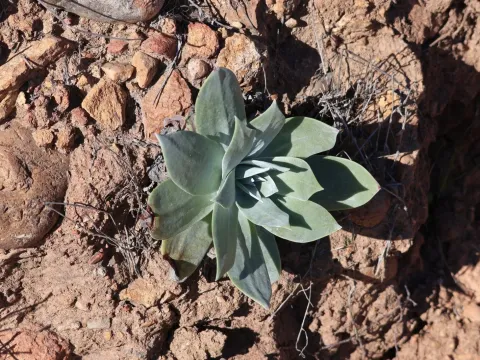
The botanical structure of the plant features dense rosettes of fleshy leaves. Many species are coated in a distinctive powdery wax, which serves as a protective layer against intense sunlight and dehydration.
The cultivation of Dudleya requires high light intensity. To maintain their compact, symmetrical shape, the plants should be kept in a sunny location, as low light causes them to lose their characteristic rosette form.
Proper soil composition is crucial for the health of the plant. A highly permeable substrate is recommended, consisting of a mix of coarse sand, perlite, and fine gravel to ensure that water drains rapidly from the root zone.
Climate requirements involve a distinct seasonal rhythm. These succulents are adapted to dry summers and cooler, moist winters, requiring significant reduction in irrigation during their dormant period to prevent tissue damage.
The primary threats to Dudleya health are fungal diseases, which are almost exclusively caused by overwatering or poor drainage. Moisture trapped in the leaf rosettes can trigger rapid rot.
Root rot is the most common cause of plant failure. It is characterized by the softening of the stem base and loss of root function, often resulting in the collapse of the entire rosette.
Pests such as mealybugs represent a significant challenge for growers. These pests tend to congregate in the tight spaces between leaves and at the base of the rosette, where they are difficult to reach.
Root mealybugs can also infest the soil, feeding on the roots and hindering the plant's ability to absorb nutrients, which eventually leads to stunted growth or death.
Effective management includes maintaining a dry environment around the crown, using sterile potting media, and applying targeted systemic insecticides if an infestation is detected.