
Anthony's Dudleya
Dudleya anthonyi
Description
Growing requirements
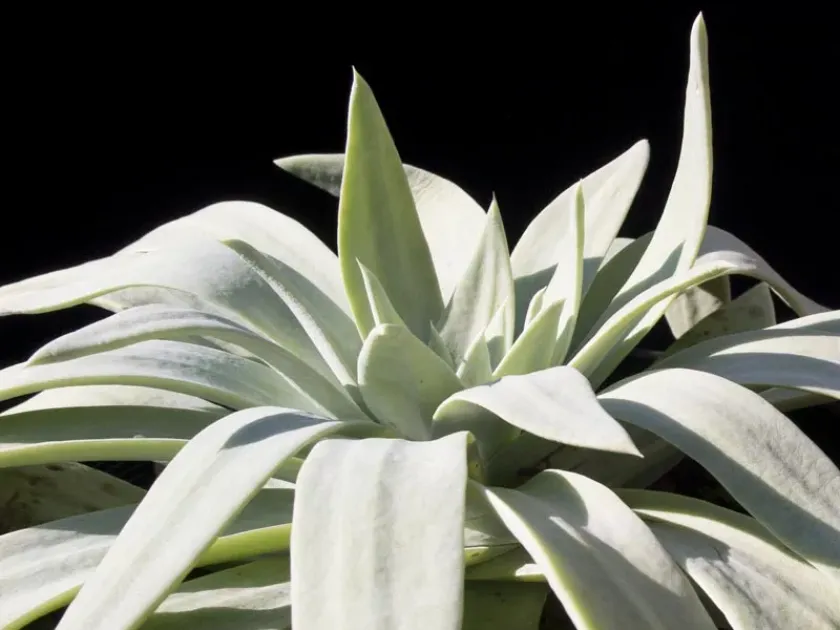
Anthony's Dudleya (Dudleya anthonyi) is a remarkable succulent species belonging to the Crassulaceae family. It is characterized by its large, rosetted fleshy leaves, which often display a distinct farina—a powdery white coating that protects the plant from intense sun and dehydration.
This species is native to the coastal regions of Baja California, Mexico, where it thrives on rocky cliffs and steep hillsides. Its evolutionary background makes it highly adapted to dry environments with sporadic moisture from coastal mist.
Cultivation requirements focus heavily on soil structure. A highly porous, mineral-based growing medium is essential to ensure rapid drainage, preventing the roots from sitting in stagnant water.
The plant requires high levels of solar radiation to maintain its dense, structural form. In indoor environments, consistent air circulation is vital to mimic the breezy coastal conditions of its natural habitat.
Economically, Anthony's Dudleya is significant within the nursery industry and the hobbyist succulent market. Its slow growth and aesthetic appeal make it a desirable choice for xeriscaping and alpine-style containers.
Main diseases and pests
The primary agricultural threat to this species is root rot, which typically develops when plants are overwatered or kept in dense, moisture-retentive potting mixes.
Common pests include mealybugs, which are notoriously difficult to eradicate from the deep leaf axils of the rosettes. Regular inspections are necessary to identify early infestations.
Scale insects can also pose a risk, feeding on the plant's sap and weakening the rosettes, which can lead to secondary fungal infections.
Fungal pathogens flourish in stagnant, humid environments; therefore, providing adequate airflow is the most effective preventative measure for long-term plant health.
In cases of severe infestation, growers must utilize targeted systemic insecticides, ensuring that the treatment does not damage the delicate waxy farina on the leaves.