
Forster's stonecrop
Petrosedum forsterianum
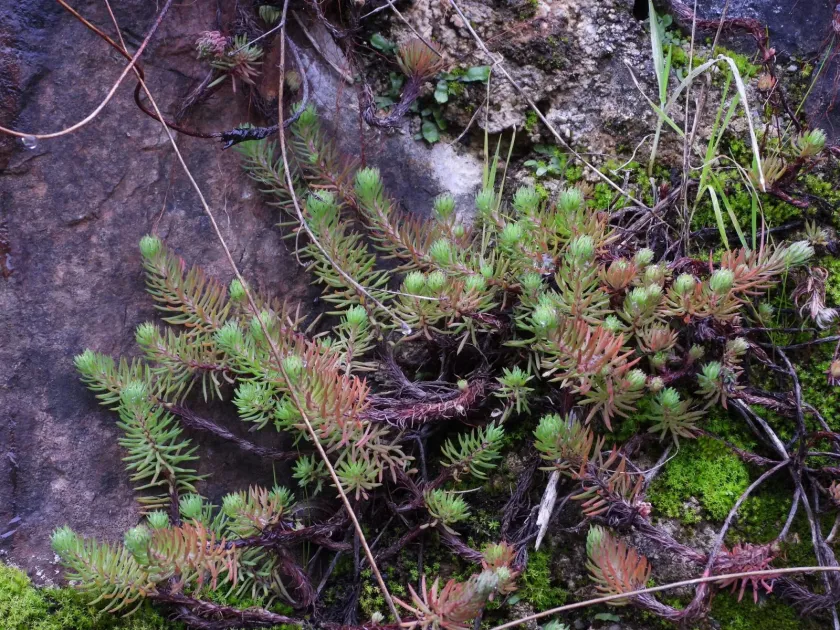
Description
Sowing dates
Forster's stonecrop is typically propagated through vegetative cuttings or division of established clumps during the spring season.
Planting in a permanent location should take place once the soil has warmed up and the risk of late spring frost has completely passed.
Seeds require a period of cold stratification, making them more suitable for sowing in autumn for germination in the following spring.
Cuttings should be allowed to callus for several days before being planted into a gritty, well-draining substrate to prevent rot.
When creating a ground cover, spacing the plants approximately 15-20 centimeters apart allows them to merge into a seamless carpet over time.
Growing requirements
This succulent belongs to the Crassulaceae family and is highly valued for its ability to thrive in poor, rocky soil conditions.
Full sun is essential for this species to maintain its characteristic compact form and vibrant leaf coloration throughout the growing season.
Excellent drainage is the most critical requirement, as the roots are highly susceptible to rot if left sitting in saturated or heavy soil.
The plant is exceptionally drought-tolerant and performs well in xeriscaping or rock gardens where water availability is limited.
Minimal fertilization is required, as excessive nutrients can result in lush, weak growth that is more susceptible to disease and winter damage.
Main diseases and pests
Fungal diseases related to overwatering represent the primary threat to the health and longevity of Forster's stonecrop.
Root rot often occurs if the soil composition is too dense, preventing the necessary oxygen from reaching the root zone.
Aphids and mealybugs are the most common insect pests, capable of causing localized stunted growth if infestations are left unmanaged.
Gastropods, particularly slugs, can cause noticeable damage to the succulent leaves during periods of high humidity and rainfall.
Routine monitoring and the removal of damaged tissue are the best strategies to maintain a healthy and disease-free colony of plants.
Harvesting
As an ornamental ground cover, this plant is not harvested for commercial crops but is maintained for aesthetic purposes in landscaping.
Deadheading faded flower stalks in late autumn helps keep the plant looking tidy and encourages more vigorous foliage growth in the following year.
If propagation material is needed, stems can be harvested in mid-summer, ensuring that only healthy, non-flowering shoots are selected.
Weeding should be performed by hand to avoid disturbing the shallow root systems that are typical of this succulent species.
In colder regions, applying a light mulch of grit or gravel around the base can help protect the crown from excessive moisture and freezing.