
Dudleya farinosa
Dudleya farinosa
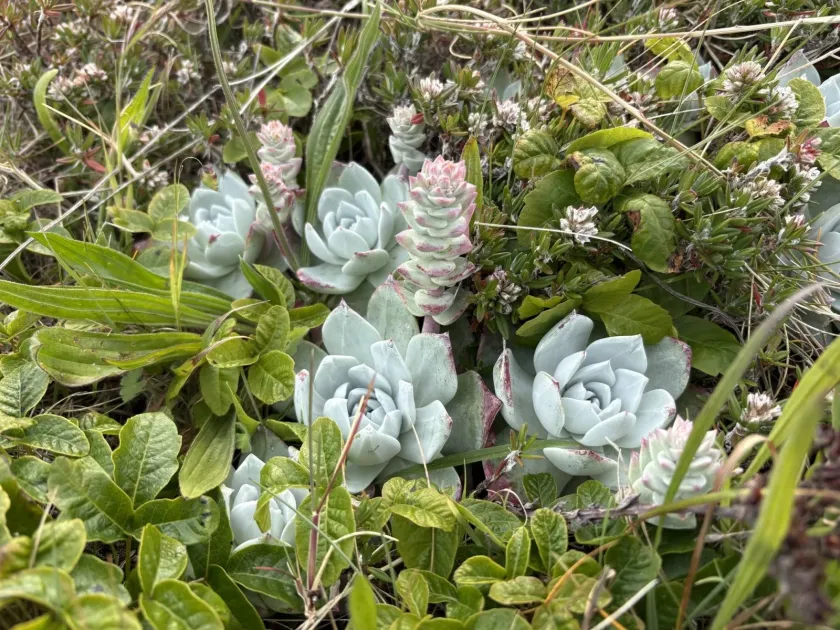
Description
Growing requirements
Dudleya farinosa, commonly known as bluff lettuce, is a perennial succulent belonging to the Crassulaceae family. It is native to the coastal cliffs and bluffs of Northern California and Southern Oregon, where it thrives in a temperate, fog-influenced climate.
This plant is distinguished by its compact, rosetted leaves that are covered in a dense, chalky white waxy powder. This feature serves as an adaptation to minimize water loss and protect the succulent from excessive ultraviolet radiation in its natural habitat.
Agricultural success with this species depends on providing a fast-draining, mineral-based soil medium. Because the roots are highly sensitive to moisture, the growing substrate should primarily consist of grit, pumice, or gravel to prevent anaerobic conditions.
Dudleya farinosa prefers bright, indirect sunlight or morning light. In cultivation, it is essential to mimic the coastal air movement to keep the foliage dry and healthy, as stagnant air in humid conditions can lead to rapid decay of the leaf tissues.
Watering practices must be strictly controlled, allowing the soil to dry out completely between sessions. During the winter dormancy period, the plant requires cool temperatures and minimal water to maintain its natural growth cycle and bloom potential.
Main diseases and pests
The primary threats to Dudleya farinosa in controlled environments are fungal pathogens resulting from overwatering or inadequate ventilation. Root and crown rot are the most frequent causes of plant loss for amateur and professional growers.
Pest pressure is mainly exerted by mealybugs, which tend to nest in the crevices between the succulent leaves. These pests are notoriously difficult to remove without damaging the protective waxy bloom on the plant's surface.
Spider mites are another common threat, particularly when the plant is kept in overly dry, hot conditions without proper airflow. They cause stippling on the leaves and can lead to a general decline in the plant's vigor.
Cultural errors, such as overhead watering, can cause water to collect in the center of the rosette. This trapped moisture often leads to localized rotting, which can rapidly spread to the entire plant if not addressed promptly.
Integrated pest management, including sterile soil usage and consistent environmental monitoring, is crucial for maintaining a healthy specimen. Frequent inspections are necessary to detect early signs of stress or pest colonization.