
Chalk Dudleya
Dudleya pulverulenta
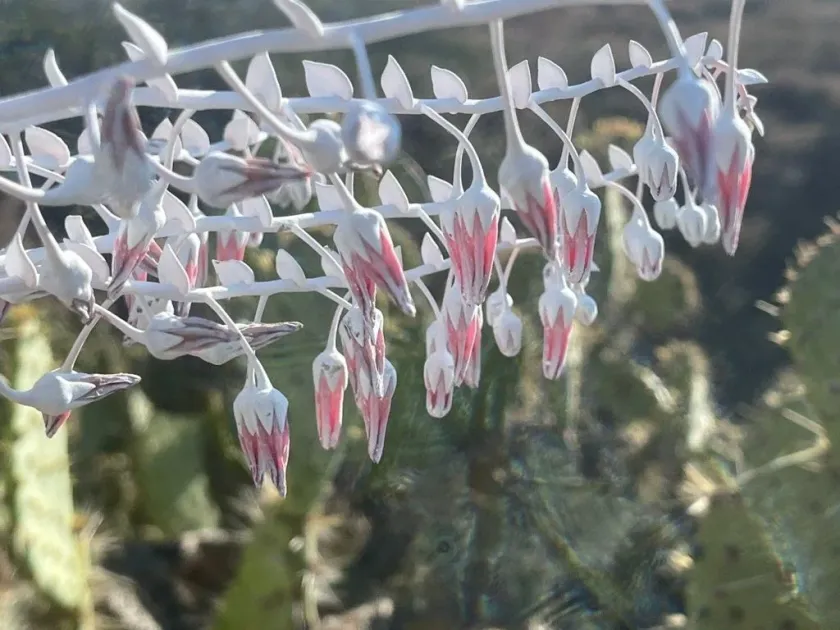
Description
Growing requirements
Dudleya pulverulenta, commonly known as Chalk Dudleya, is a succulent plant in the Crassulaceae family. It is native to the rocky cliffs and slopes of Southern California and Mexico.
The plant is distinguished by its large, succulent leaves arranged in a rosette, heavily coated in a fine, chalky, white powder that serves as a protective layer against environmental stress.
Success in cultivation requires high light levels and excellent drainage. It thrives in porous, mineral-based soil mixes specifically formulated for succulents and cacti.
Temperature management is crucial; the plant prefers warm days and cooler nights. It is not frost-hardy and requires protection from freezing temperatures in indoor environments.
Watering must be very disciplined. During the growing season, water sparingly, allowing the soil to dry out completely. During winter dormancy, keep the plant almost entirely dry to prevent rot.
Main diseases and pests
The most significant threat to Chalk Dudleya is root rot caused by overwatering or poor air circulation, which creates an environment conducive to fungal infections.
Pests, particularly mealybugs, are frequent offenders. These insects hide in the tight rosettes, feeding on the plant's sap and weakening its structural integrity.
Slugs and snails can cause cosmetic damage to the leaf surfaces, especially when the plants are grown in outdoor nursery conditions with high humidity levels.
Chemical control for pests must be used with caution. The protective farina (chalky coating) is easily damaged by oil-based or abrasive treatments, permanently scarring the foliage.
Prevention relies on providing proper spacing between plants to maximize airflow, ensuring optimal light exposure, and monitoring for early signs of pest infestation or soft tissue rot.