
Dwarf houseleek
Sempervivum pumilum
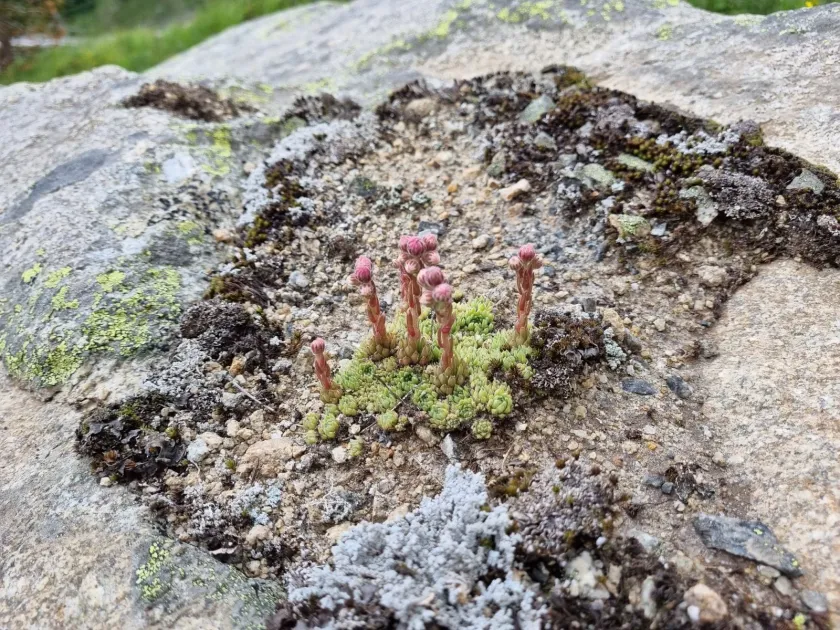
Description
Growing requirements
Dwarf houseleek (Sempervivum pumilum) is a member of the Crassulaceae family. This perennial succulent originates from the subalpine regions of the Caucasus, where it thrives in rocky, high-altitude environments.
The plant is characterized by its small, dense rosettes that rarely exceed three centimeters in diameter. Its leaves are succulent and often ciliate, an adaptation that allows the plant to survive in nutrient-poor conditions with minimal rainfall.
To cultivate Sempervivum pumilum successfully, one must provide a well-drained, gritty substrate. Heavy garden soils must be amended with sand or crushed stone to ensure that water does not accumulate around the roots.
The plant requires full sun to maintain its compact habit and vibrant coloration. If placed in shaded areas, the plant becomes leggy and loses its hardiness, becoming more susceptible to pathogens and winter frost damage.
In terms of agricultural and horticultural use, this species is ideal for rock gardens, crevice plantings, and as a low-maintenance ground cover in dry, xeriscaped landscape designs.
Main diseases and pests
Root rot is the most significant threat to the dwarf houseleek. It is almost always a result of poor drainage or overwatering, leading to the rapid decay of the plant's delicate root system.
Aphids and mealybugs can occasionally infest the rosettes, particularly in spring. These pests hide deep within the leaves, making them difficult to spot until significant damage has already occurred.
Gastropods, such as slugs and snails, find the succulent leaves attractive during damp weather. Protective measures such as gravel mulching are effective in deterring these common garden pests from the rosettes.
Fungal infections can occur if the leaves are constantly wet or lack proper air circulation. Maintaining a dry environment around the crown of the plant is the best preventative strategy against these threats.
Careful monitoring and immediate removal of any dead or decaying tissue help keep the colony healthy and prevent the spread of localized infections to neighboring rosettes.