
Funck's houseleek
Sempervivum funckii
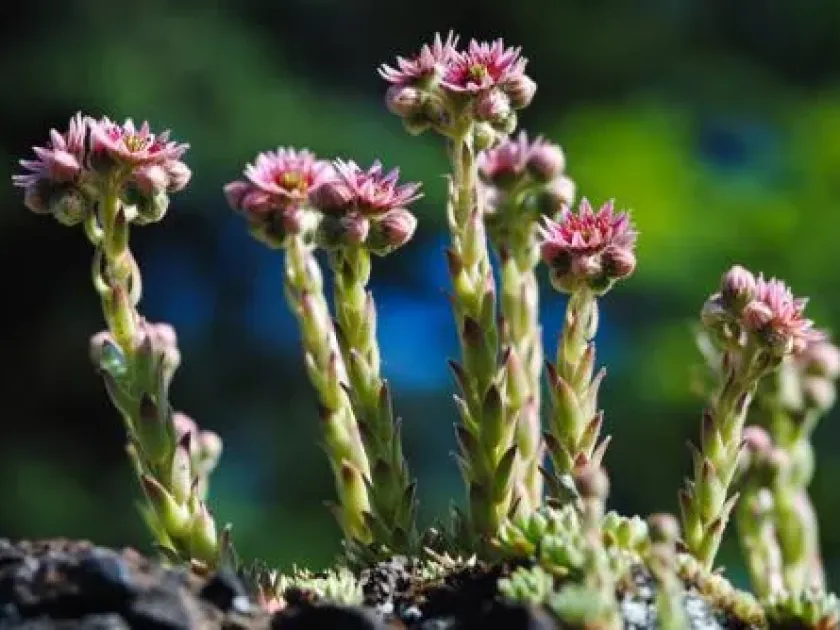
Description
Growing requirements
Funck's houseleek (Sempervivum funckii) is a perennial succulent plant belonging to the Crassulaceae family. It is a natural hybrid native to the mountainous regions of the Eastern Alps.
The plant thrives in well-drained, gritty, or sandy soils with low fertility. Excellent drainage is critical for this species, as stagnant moisture is the primary cause of plant loss.
Full sun exposure is required to maintain the plant's characteristic compact rosettes and vibrant coloration. While it tolerates partial shade, excessive shade leads to etiolation.
This species is exceptionally cold-hardy, capable of surviving harsh winter temperatures. It is perfectly adapted to rock crevices and alpine garden settings where other plants struggle.
Maintenance is minimal, requiring only occasional clearing of debris. Watering should be deep but infrequent, mimicking the plant's natural arid habitat requirements.
Main diseases and pests
The most significant threat is root rot caused by poor soil drainage and excessive soil moisture. Once root rot sets in, it is often difficult to save the affected rosettes.
Aphids can occasionally cluster in the center of the rosettes, feeding on the tender sap. Manual removal or a gentle insecticidal soap spray can manage these infestations.
Slugs and snails are common pests in damp environments, leaving visible holes in the succulent leaves. Surrounding the plants with coarse gravel often deters these mollusks.
Rust fungi can occasionally affect the plants during periods of high humidity and poor air circulation. Removing infected leaves is the best first line of defense.
Root-feeding larvae, such as those of the June beetle, can cause localized damage. If a rosette appears loose or detached from the soil, check the roots for such pests.