
Dudleya brittonii
Dudleya brittonii
Description
Growing requirements
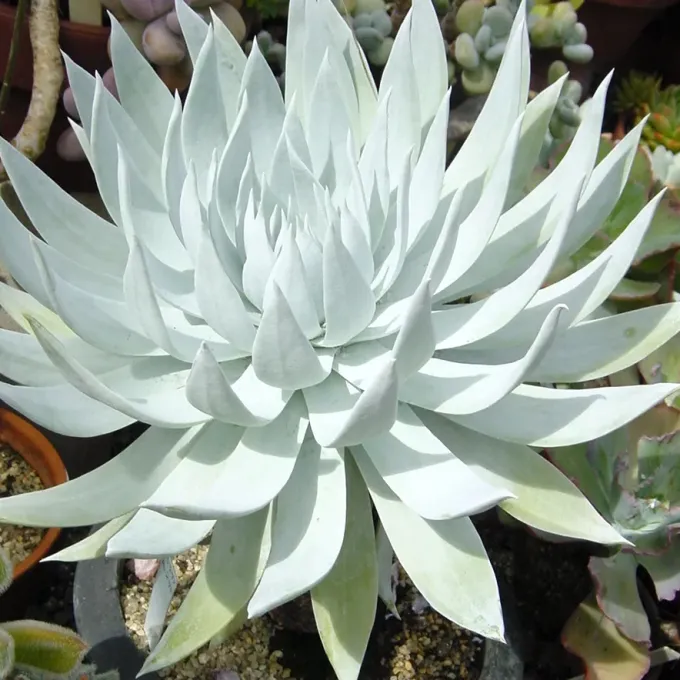
Dudleya brittonii is a stunning succulent species belonging to the Crassulaceae family. It is characterized by its large, rosette-forming leaves that are heavily coated in a fine, powdery, white epicuticular wax, which serves as a protective layer against harsh environmental conditions.
This species is native to the Baja California Peninsula in Mexico, primarily inhabiting cliff faces and rocky slopes. Its natural environment is marked by dry, rocky soil and a reliance on coastal humidity, making it a specialized xerophyte adapted to extreme drainage.
Cultivation requires strict adherence to soil composition protocols. A mineral-based substrate consisting of grit, coarse sand, and minimal organic matter is essential. Poor drainage remains the primary cause of failure in agricultural and hobbyist settings.
The climate requirements for this plant involve high light exposure with good air circulation. While the plant can tolerate light frost, it must be kept entirely dry during the dormant season to prevent cellular damage caused by freezing moisture within the tissues.
Dudleya brittonii is primarily used as an ornamental crop in specialized nurseries. Its architectural shape and unique coloration make it a high-value plant for succulent enthusiasts, landscape designers, and botanical gardens focusing on arid-climate species.
Main diseases and pests
The primary threats to Dudleya brittonii are related to fungal pathogens, most notably root and crown rot. These conditions are directly linked to irrigation management and the lack of proper drainage in the growth medium.
Pest pressures are largely dominated by mealybugs, which tend to congregate in the base of the rosettes. Their presence can significantly reduce the vitality of the plant and facilitate the entry of secondary bacterial infections through the damaged epidermis.
Damage to the delicate wax layer on the leaves leaves the plant exposed to external stress factors and pathogens. Therefore, handling of the plant should be kept to an absolute minimum to preserve its natural defense mechanism.
Etiolation is a physiological disorder that occurs due to insufficient light levels. This condition ruins the plant's natural aesthetic form and makes the leaves more susceptible to rotting due to structural weakness and moisture accumulation.
- Use only well-draining, gritty soil mixtures.
- Apply preventative systemic insecticides if pests are detected.
- Ensure constant airflow around the rosettes to prevent stagnant air.