
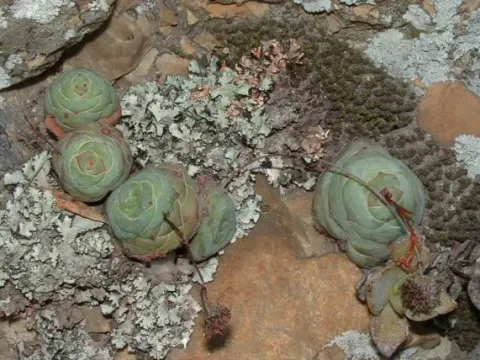
Cremnophila
Cremnophila
Cremnophila is a genus of succulent plants belonging to the Crassulaceae family. Native to the mountainous regions of Mexico, these plants typically grow on rocky cliffs and steep slopes.
What the section contains


Cremnophila
The plant requires high levels of light to maintain its compact, rosette-forming structure. Exposure to direct sunlight is essential for the healthy development of its fleshy, succulent leaves.
Cultivation requires a highly porous and well-draining substrate. Using standard potting soil without amendments is detrimental, as the plant is highly susceptible to root rot caused by moisture retention.
Temperature management should follow seasonal cycles, with warmer temperatures during the active growing phase and cooler, dry conditions during the winter dormancy period.
Watering practices must be conservative. During the growing season, allow the soil to dry out completely between waterings, and reduce the frequency significantly during the winter months.
Fungal diseases caused by overwatering and poor aeration represent the primary threat to the longevity of Cremnophila plants.
Mealybugs are a common pest problem; these insects often congregate in the crevices of the leaf rosettes, where they feed on sap and weaken the plant structure.
Root mealybugs can infest the soil medium, causing the plant to decline rapidly without obvious signs of infestation on the visible leaves.
Spider mites may appear if the plant is kept in an environment with high temperatures and lack of air circulation, leading to discolored and stunted growth.
Effective management includes maintaining a dry environment around the leaves and utilizing specialized systemic insecticides if an infestation is detected.