
Dudleya hybrids
Dudleya hybrids
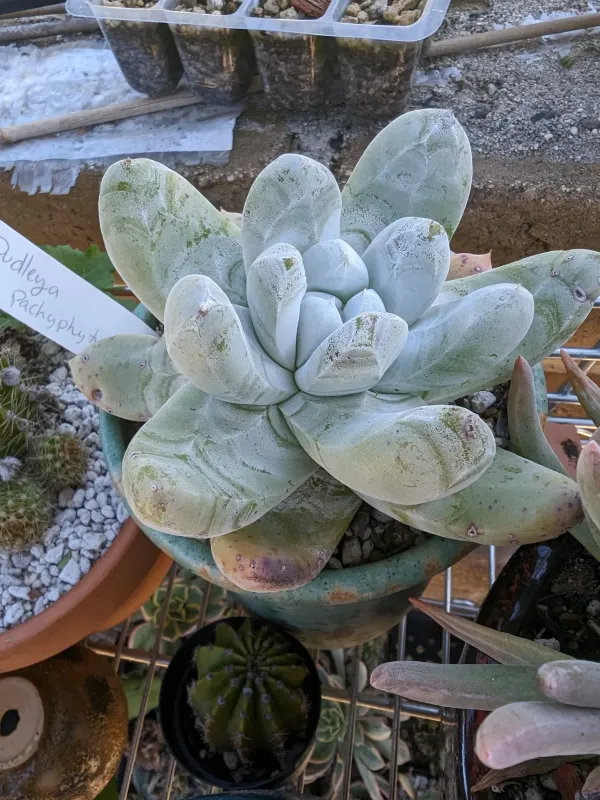
Description
Growing requirements
Dudleya hybrids represent a group of succulent plants belonging to the Crassulaceae family. These plants are prized for their tight rosettes of thick, fleshy leaves, which are often coated in a powdery, waxy substance known as farina, protecting the plant from both drought and excessive solar radiation.
Originating from the coastal and arid regions of California and Mexico, these plants are highly adapted to climates characterized by cool, foggy summers and mild, rainy winters. Their biological structure allows them to thrive in rocky crevices with minimal nutrient availability.
Successful cultivation requires a fast-draining substrate, typically composed of a mix of volcanic grit, sand, and a small percentage of organic soil. Proper drainage is the most critical factor; the roots must never stand in water, as this will lead to immediate tissue decay.
These plants thrive in bright, filtered light. While they enjoy the sun, protection from intense mid-afternoon heat is recommended for container-grown specimens to prevent leaf scorch. They are ideal for xeriscaping, rock gardens, and specialized succulent collections.
In terms of irrigation, Dudleya hybrids require a strict cycle: water deeply during the growing season and allow the soil to dry out completely between waterings. During their summer dormancy period, water should be significantly reduced or suspended entirely to prevent stress.
Main diseases and pests
The most significant threat to the plant is fungal root rot caused by stagnant water in the root zone. Ensuring optimal airflow and utilizing porous potting containers are essential preventive measures to maintain plant longevity.
Mealybugs are the most frequent insect pests, often hiding within the tight foliage of the rosette. Their feeding weakens the plant and can facilitate the secondary entry of bacterial or viral pathogens. Regular inspections of the leaf bases are highly recommended.
Aphids can occasionally target the inflorescences, especially during the blooming period. These pests extract sap from the developing flower stalks and may need to be controlled with soft horticultural soaps if the infestation becomes heavy.
Improper environment, specifically lack of sunlight, causes the rosettes to stretch, a process called etiolation. This structural change compromises the plant's natural defense mechanisms, making it more susceptible to environmental stress and opportunistic infections.
To keep the plants healthy, it is advised to clean away dead lower leaves throughout the year. Accumulated debris can harbor pests and promote damp conditions, which are the primary precursors to most disease-related issues in the Dudleya genus.