
Rhipsalidopsis rosea
Rhipsalidopsis rosea
Description
Growing requirements
Rhipsalidopsis rosea is a distinct species within the Cactaceae family. Known commonly as the rose easter cactus, it is an epiphyte native to the coastal mountains of Brazil, where it grows in cool, moist, shaded environments, often attached to mossy tree trunks.
The plant requires bright but filtered light to thrive. Unlike desert cacti, it cannot withstand intense direct sun, which causes the stem segments to become chlorotic or develop reddish sunburn spots. A location with morning sun is ideal for promoting healthy growth.
The potting medium must be highly porous and well-draining, mimicking the forest litter where the plant naturally grows. A blend of peat moss, perlite, and pine bark is recommended to ensure adequate oxygenation of the roots, preventing them from suffocating.
Watering requirements follow a specific seasonal rhythm. During the flowering and growing season, the substrate should remain consistently moist. However, in the autumn and early winter, a cooling period and reduced watering are essential to trigger the floral buds for the following spring.
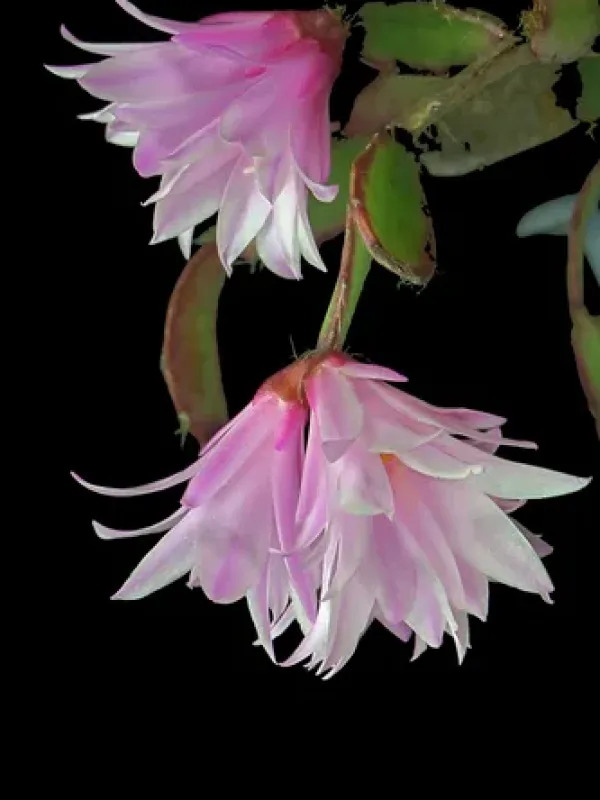
For ornamental purposes, this species is highly valued for its mass flowering display. The blooms are typically pink, funnel-shaped, and appear in clusters at the tips of the stems, making it an excellent candidate for hanging baskets in indoor or greenhouse settings.
Main diseases and pests
Root rot is the most common threat, often caused by overwatering or soil that lacks proper drainage. Symptoms include wilting of segments and a soft, mushy base of the main stem, which usually signals that the root system has already collapsed.
Mealybugs are frequent pests that congregate in the crevices between stem segments. Their feeding habits cause stunted growth and can lead to secondary viral or bacterial infections. Removal involves physical cleaning or systemic insecticide applications.
Scale insects present a significant challenge due to their protective coverings. They appear as small, firm bumps on the stem. If left untreated, they extract vital nutrients and weaken the plant, making it susceptible to opportunistic pathogens.
Spider mites thrive in the dry air of modern homes. They are difficult to detect until the plant begins to show signs of speckling or webbing. Regular misting and keeping the environment slightly more humid is an effective preventative measure.
Fungal infections, such as those caused by Phytophthora, can quickly devastate a collection. To manage this risk, it is crucial to maintain good air circulation around the plants and avoid splashing water directly onto the stem segments when watering.