
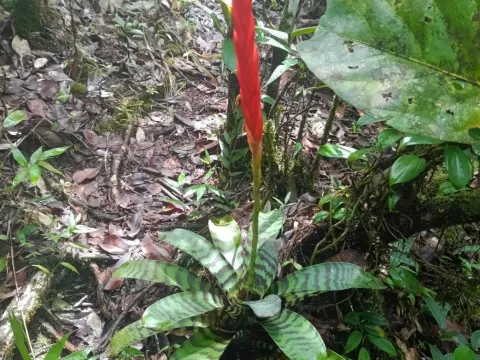
Flaming sword
Vriesea splendens (Brongn.) Lem.
Vriesea splendens, commonly known as the Flaming sword, is a striking epiphytic plant within the Bromeliaceae family. Native to the tropical rainforests of Venezuela and Guyana, it is highly prized for its unique, sword-shaped inflorescence and patterned foliage.
What the section contains
Flaming sword
Successful cultivation of this species depends on mimicking its natural epiphytic habitat. It requires bright, indirect light to thrive, as direct sunlight can easily scorch its delicate, broad leaves. Maintaining a consistent temperature between 20–25 degrees Celsius is essential for optimal growth.
The potting medium must be exceptionally well-draining, as the roots are highly susceptible to rot. A specialized mix composed of pine bark, peat moss, perlite, and charcoal is ideal for providing the necessary aeration and support for the plant's root system.
One of the most distinct features of Vriesea management is the irrigation method. Water should be poured into the central tank or rosette, rather than directly into the soil. Using room-temperature, dechlorinated water helps prevent shock to the plant's delicate vascular tissues.
High relative humidity, ideally between 70–80 percent, is necessary for the plant to maintain its luster. In lower humidity environments, regular misting and the use of pebble trays filled with water can significantly enhance the plant's overall health and vigor.
The most frequent pest challenges for Vriesea include scale insects and mealybugs. These pests hide in the crevices of the rosette, making manual removal or the application of specialized horticultural oils and soaps a regular maintenance task.
Root rot remains the primary physiological threat, typically caused by overwatering or poor drainage. Once root decay begins, the foliage often shows symptoms of wilting and browning, indicating a severe disruption in nutrient and water uptake.
Fungal infections, such as leaf spot, can appear in environments with stagnant air and insufficient ventilation. Improving airflow around the plant and ensuring that the rosette is not constantly waterlogged helps mitigate the risks of pathogen development.
Prevention is centered on rigorous sanitation practices. Disinfecting tools before pruning and isolating new specimens helps prevent the accidental introduction of pests or pathogens into the collection of ornamental plants.
Monitoring the color and texture of the leaves serves as an early diagnostic tool. Pale or spotted leaves are usually early warnings that the current environmental conditions or nutrient levels require immediate professional adjustment.