
Tillandsia velutina
Tillandsia velutina
Description
Growing requirements
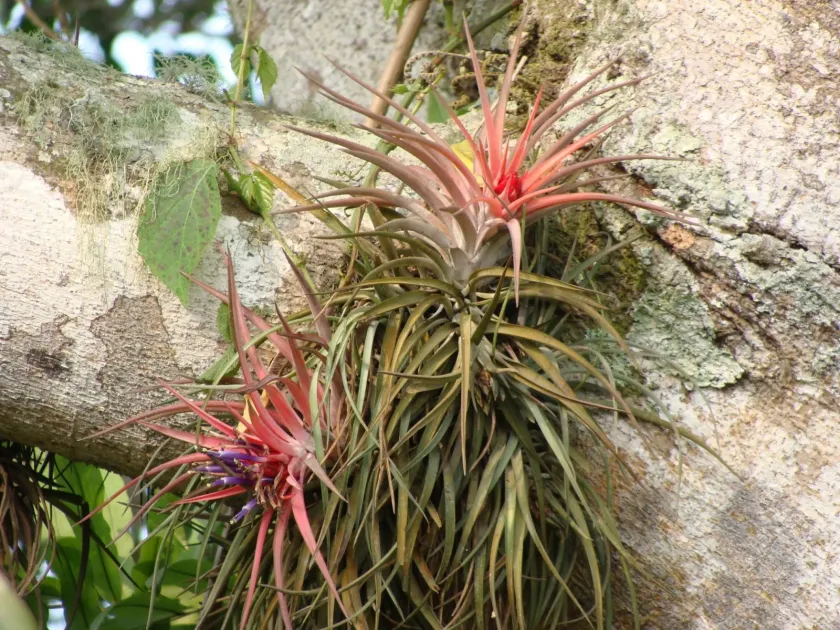
Tillandsia velutina is a perennial epiphytic plant belonging to the Bromeliaceae family. Originating from the tropical forests of Guatemala and Mexico, this species is highly valued in horticulture for its distinct velvet-like texture and silvery foliage.
The plant grows as a rosette of narrow, triangular leaves covered with dense trichomes. These specialized structures are essential for the plant's survival, as they act as a biological filter, absorbing water, minerals, and atmospheric nutrients directly from the air and humidity.
Climate requirements for this culture include stable, warm temperatures typically ranging between 18 and 26 degrees Celsius. It is a thermophilic plant that does not tolerate cold drafts, which can lead to significant physiological stress and leaf tissue damage.
Regarding light, it requires bright, indirect sunlight to thrive. While it can adapt to lower light levels, sufficient exposure is necessary for the plant to maintain its characteristic compact shape and the dense trichome layer that protects it from dehydration.
Agricultural management requires regular misting or periodic soaking in soft, room-temperature water. After watering, it is crucial to ensure rapid air circulation to allow the leaf axils to dry, preventing the accumulation of moisture that can lead to rot.
Main diseases and pests
Pest management is focused on controlling common greenhouse insects such as mealybugs and spider mites. These pests thrive in the dense foliage, and due to the plant's delicate leaf surface, systemic insecticides should be used with extreme caution to avoid phytotoxicity.
Fungal and bacterial rots are the most common diseases, usually resulting from inadequate airflow or excessive moisture trapped within the leaf base. Proper sanitation and ensuring the plant dries completely after misting are the primary methods of disease prevention.