
Vriesea hieroglyphica
Vriesea hieroglyphica (Carrière) E. Morren
Description
Growing requirements
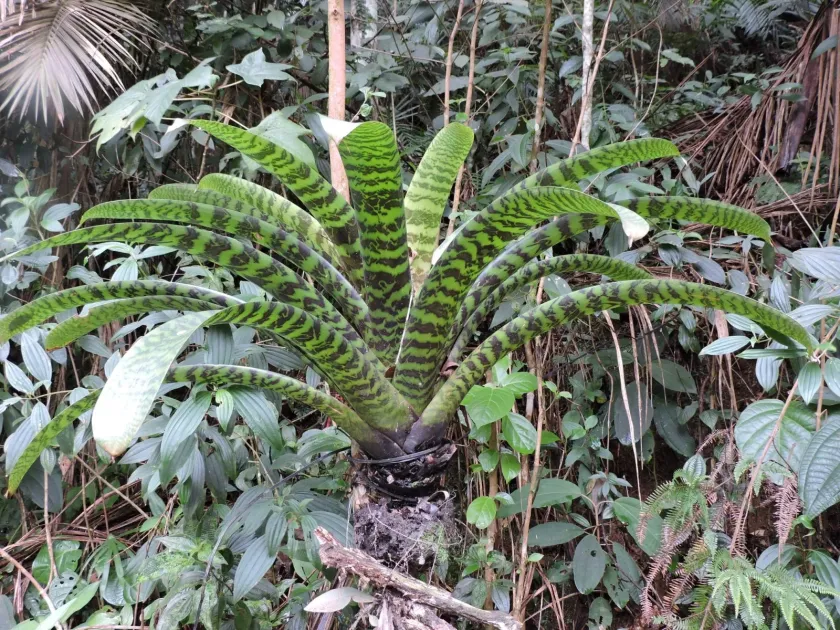
Vriesea hieroglyphica is a striking member of the Bromeliaceae family, native to the tropical rainforests of Brazil. This epiphytic species is highly prized for its unique, wide foliage, which features distinctive dark brown horizontal bands resembling ancient hieroglyphs.
Botanically, it functions as an epiphyte, often growing on tree branches in its natural habitat. It thrives in diffused light environments, as direct sunlight can easily bleach or scorch its delicate, pattern-rich leaves, leading to irreversible damage.
For successful indoor or greenhouse cultivation, the plant requires a warm, humid environment with consistent temperatures between 20°C and 25°C. Cold drafts and sudden temperature fluctuations must be avoided to ensure the health of the foliage.
The substrate should mimic the natural epiphytic growing conditions: a light, well-draining mixture of orchid bark, perlite, and sphagnum moss is ideal. Water should be added to the central tank (rosette), ensuring that it remains clean and fresh to prevent bacterial buildup.
Humidity management is critical for this species. Regular misting, the use of humidifiers, or placing the pot on a tray filled with wet pebbles will help maintain the high atmospheric moisture levels necessary for the plant to thrive in dry interior climates.
Main diseases and pests
Common pests include scale insects and mealybugs, which tend to hide in the tight crevices of the leaf base. Regular inspections are necessary to detect early signs of infestation and apply control measures like manual removal or soap-based insecticidal sprays.
Fungal rots, particularly heart rot of the rosette, are the most severe threats to the plant's survival. This is usually triggered by waterlogging in the tank or poor drainage, which stresses the plant and encourages opportunistic fungal growth during cooler periods.