
Vriesea and Guzmania
Vriesea x Guzmania
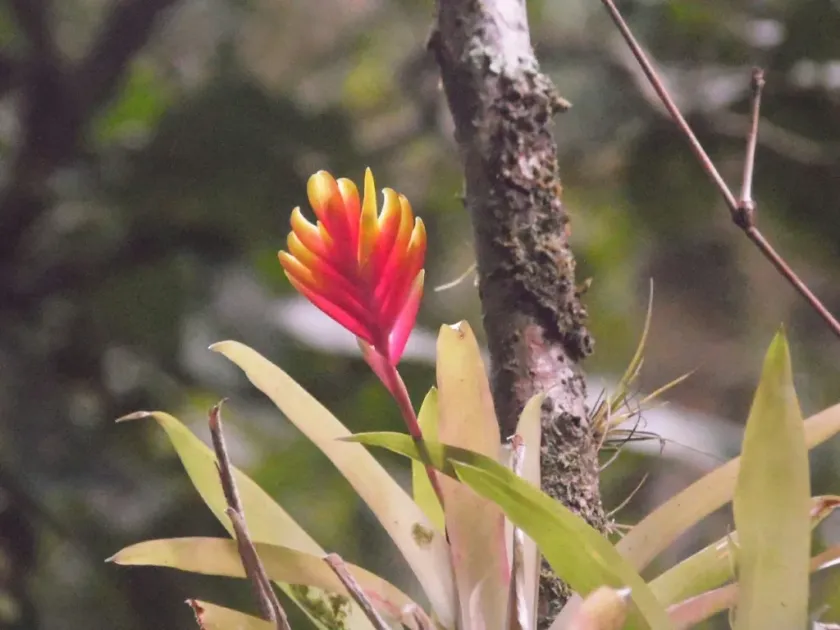
Description
Growing requirements
Vriesea and Guzmania belong to the Bromeliaceae family and are well-known epiphytic plants originating from the tropical regions of Central and South America. These plants are uniquely adapted to grow on tree branches, where they collect water and nutrients within their central tank-like rosettes.
For successful cultivation, these plants require temperatures ranging from 20°C to 25°C. They are sensitive to direct midday sun, which can cause leaf scorch, so bright, filtered light is essential. During the winter, provide supplemental lighting to maintain photosynthesis in lower light conditions.
A well-draining, airy substrate is crucial for these species. A mixture of orchid bark, peat moss, perlite, and charcoal provides the ideal environment for their roots. Avoid heavy soil, as it retains too much moisture and can lead to root suffocation and decay.
Irrigation must be performed carefully; water should be poured directly into the central tank. It is recommended to use soft, room-temperature water. Ensure the water is replaced frequently to prevent the buildup of salts or bacteria, especially if the ambient temperature drops.
High humidity is vital for the health of Vriesea and Guzmania. Aim for relative humidity levels between 60% and 80%. If the air is too dry, misting the plants regularly or placing them on humidity trays filled with wet pebbles is highly effective for maintaining optimal conditions.
Main diseases and pests
The primary threat to these bromeliads is fungal infection, typically caused by overwatering or poor water quality. If water stays in the leaf axils for too long under cool conditions, it can trigger stem rot, which is often fatal to the plant.
Pests like mealybugs and scale insects are common intruders. These insects thrive in the protected crevices of the leaf rosettes. If left untreated, they can severely stunt the plant's growth by sucking essential sap and transmitting viral diseases.
Spider mites are another major concern, especially in environments with dry air. They quickly infest the leaves, causing a loss of color and visible webbing. Regular monitoring and maintaining high ambient humidity are the best deterrents against these pests.
Treatment should involve systemic insecticides or horticultural soaps. When applying chemical treatments, ensure the solution penetrates the leaf bases where pests typically hide. Always follow dosage guidelines to avoid chemical burn on sensitive foliage.
Proactive care, such as keeping the growing area clean and ensuring good air circulation, significantly reduces the pressure from diseases and pests. Quarantine any new plants before introducing them to an existing collection to prevent the spread of infestations.