
Tillandsia werdermannii
Tillandsia werdermannii
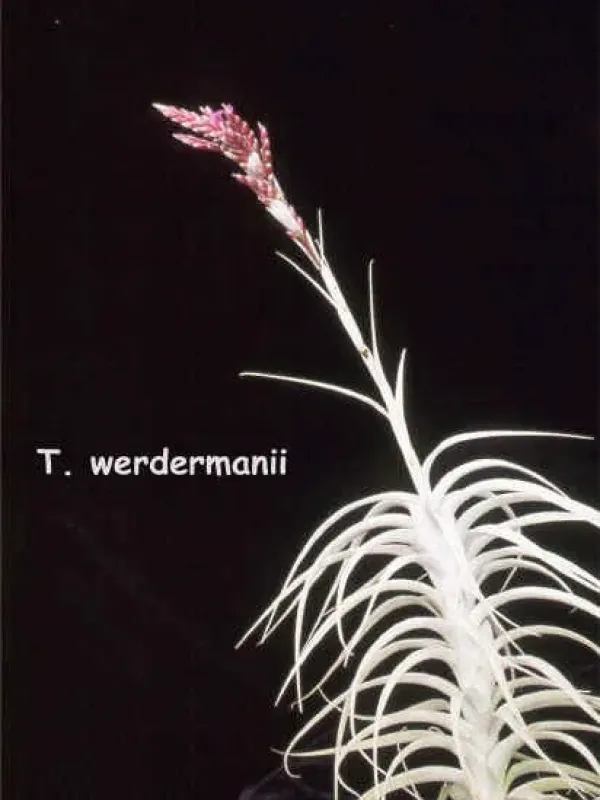
Description
Growing requirements
Tillandsia werdermannii is a perennial epiphytic plant belonging to the Bromeliaceae family. It is recognized for its unique rosette structure and adaptation to extreme environmental conditions typically found in its native habitat.
The species originates from the high-altitude regions of Bolivia. It has evolved to thrive on rocky substrates or tree branches, utilizing its specialized trichomes to absorb moisture and nutrients directly from the atmosphere.
Agricultural and cultivation requirements focus on light and airflow. Bright, indirect light is essential for healthy growth, while constant ventilation prevents moisture from stagnating within the dense leaf rosettes.
Temperature management is crucial, with an ideal range between 18 and 25 degrees Celsius. The plant should be protected from temperatures dropping below 10 degrees, as it lacks cold hardiness.
Watering should be performed by misting or soaking the plant briefly in demineralized water. It is vital to ensure the plant dries out completely within a few hours to avoid tissue decay.
Main diseases and pests
The most common health issues for Tillandsia werdermannii are related to fungal pathogens triggered by poor air circulation and excessive humidity. Proper drying periods are the primary prevention strategy.
Insect pests, including spider mites and mealybugs, are frequent threats in indoor environments. They tend to settle in the base of the leaves, causing structural damage and weakening the plant's natural resistance.
Control of infestations requires careful application of pesticides, as epiphytes are sensitive to certain chemical compounds found in standard fertilizers or harsh insecticides.
Nutrient deficiency may occur if the plant is kept in an environment with absolutely no airflow or low air quality for extended periods. Weakened plants become significantly more susceptible to environmental stressors.
Monitoring for any signs of leaf discoloration or softening at the base is essential. Swift action, such as adjusting the watering schedule or isolating the plant, helps mitigate these common cultivation threats.