
Tillandsia xiphioides
Tillandsia xiphioides
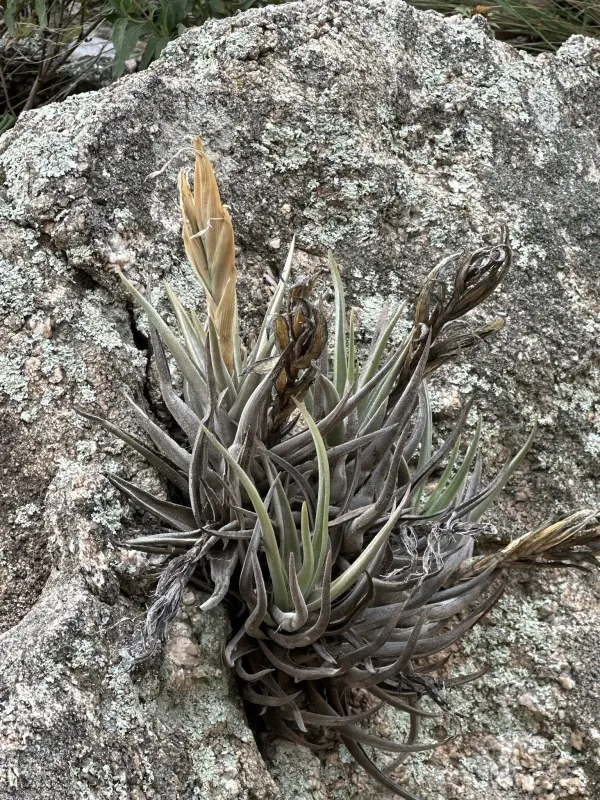
Description
Growing requirements
Tillandsia xiphioides is a fascinating member of the Bromeliaceae family, native to the high-altitude regions of Argentina and Bolivia. Unlike terrestrial plants, this species is an atmospheric epiphyte that lacks a functional root system for soil nutrient uptake, instead relying on specialized trichomes on its foliage to absorb moisture from the atmosphere.
The morphology of this plant is perfectly adapted to its arid mountain habitat. It forms a dense rosette of stiff, gray-green leaves densely covered in silver scales. These structures serve a dual purpose: they effectively harvest water from mist and fog, and they reflect intense solar radiation to protect the plant from extreme evaporation.
To cultivate Tillandsia xiphioides successfully, one must mimic its natural environment. High light intensity is essential, though direct midday sun should be avoided during the hottest months. Furthermore, excellent air circulation is non-negotiable to prevent moisture buildup within the rosette, which is the primary cause of plant death in cultivation.
Temperature management should reflect diurnal fluctuations. Ideally, the plant appreciates warm days and cooler nights. It is hardy enough to handle slight drops in temperature but should be protected from frost. The plant is best mounted on porous materials such as bark or driftwood, which allows for optimal drainage and air exposure.
During the flowering season, the plant produces distinctive white or pale-colored flowers that are highly fragrant. This period requires slightly more humidity to support the floral development, but care must be taken to ensure that the water does not pool at the base of the inflorescence for extended durations.
Main diseases and pests
The most critical threat to Tillandsia xiphioides is crown rot. This condition occurs when water remains trapped in the central part of the rosette for too long, creating an environment conducive to bacterial and fungal growth that quickly destroys the plant tissues.
Mealybugs are the most common pest infestation encountered in indoor collections. They tend to lodge themselves deep within the leaf axils, making manual removal or insecticide application challenging without damaging the protective coating of the leaves.
Scale insects can also pose a significant problem, as they attach to the leaf surface and drain plant sap, causing yellowing and stunted growth. If left untreated, they can lead to secondary infections and the overall decline of the specimen.
Hard water is a common abiotic threat in regions with alkaline water supplies. Mineral deposits can clog the trichomes, effectively choking the plant by preventing it from absorbing atmospheric moisture efficiently, leading to a slow dehydration process.
Effective pest and disease management requires a proactive approach. Regular inspection of the plant's heart and base, combined with the use of clean, soft water, will significantly mitigate these threats and ensure the long-term health and vitality of your Tillandsia.