
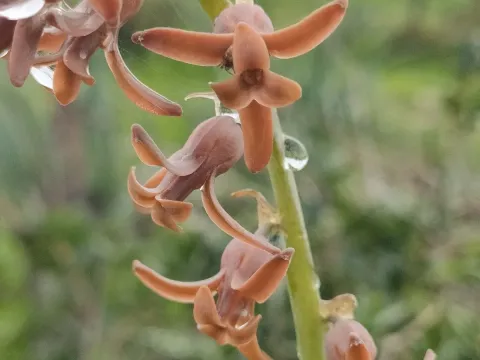
Dipcadi
Dipcadi
Dipcadi is a genus of perennial bulbous plants belonging to the Asparagaceae family, which was previously classified under the Hyacinthaceae subfamily.
What the section contains
 Dipcadi bakeriana
Dipcadi bakeriana
Dipcadi bakeriana
 Dipcadi crispum
Dipcadi crispum
Dipcadi crispum
 Dipcadi erythraeum
Dipcadi filifolium
Dipcadi filifolium
Dipcadi erythraeum
Dipcadi erythraeum
Dipcadi filifolium
Dipcadi filifolium
 Dipcadi glaucum
Dipcadi hybrid
Dipcadi hybrids
Dipcadi glaucum
Dipcadi glaucum
Dipcadi hybrid
Dipcadi hybrids
 Dipcadi serotinum
Dipcadi serotinum
Dipcadi serotinum
 Green dipcadi
Dipcadi viride
Green dipcadi
Dipcadi viride
 Long-leaved Dipcadi
Dipcadi longifolium
Long-leaved Dipcadi
Dipcadi longifolium
Dipcadi
The native range of this plant covers arid regions of Africa, the Mediterranean, and Southwest Asia. In the wild, it thrives in rocky soils and sandy semi-deserts.
For successful cultivation, the plant requires excellent drainage and high sun exposure. Moisture stagnation around the bulb is detrimental to the development of this species.
Growing media should be light, sandy, and neutral to slightly alkaline. Heavy clay soils are unsuitable and often trigger the development of rot.
The temperature regime should be moderate during the growing season, followed by a distinct dry dormant period. The plant lacks high winter hardiness and is primarily grown in greenhouses.
The main threats to the genus are related to improper irrigation practices. Excessive soil moisture leads to fungal diseases, such as fusarium wilt and various types of root rot.
Poor ventilation in greenhouse environments promotes the spread of powdery mildew on the leaf blades.
Among pests, soil nematodes and the bulb mite pose the greatest threat, as they damage the root system and the bulb scales.
The aerial parts of the plant in indoor conditions can be infested by aphids or spider mites when air humidity drops to critical levels.
Prevention relies on strictly adhering to the bulb drying schedule and using sterilized substrates during the planting process.