
Long-leaved Dipcadi
Dipcadi longifolium
Description
Growing requirements
The Long-leaved Dipcadi (Dipcadi longifolium) is a bulbous perennial plant classified under the Asparagaceae family. Originating from the arid zones of India, this species is well-adapted to high-temperature environments and has evolved specialized mechanisms to survive in regions with unpredictable rainfall patterns.
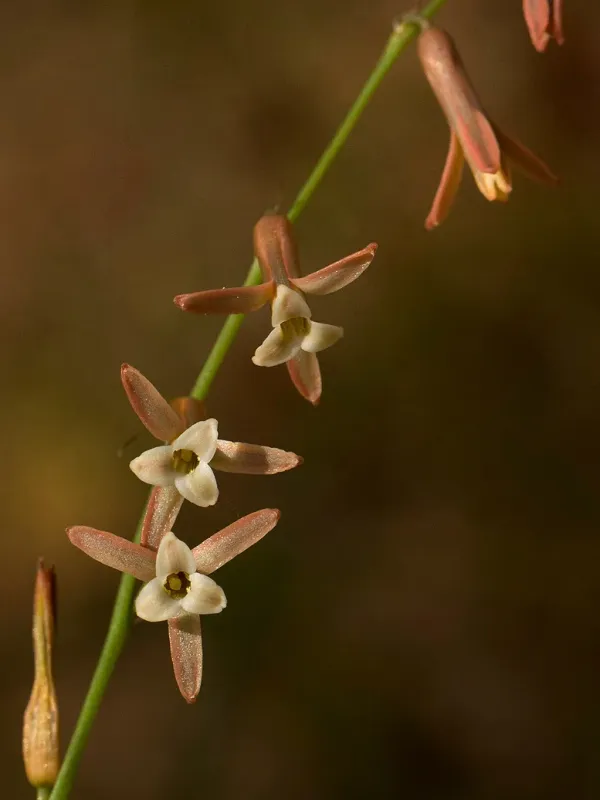
Botanically, the plant is distinguished by its elongated, linear leaves that grow from a central bulb and a tall flower stalk. Its inflorescence typically consists of drooping, greenish-brown bell-shaped flowers, which are considered a hallmark feature of the Dipcadi genus in botanical collections.
Regarding soil and site requirements, this culture demands excellent drainage and porous, sandy soil substrates. It is extremely sensitive to moisture accumulation, which necessitates a well-drained planting site, ideally with high mineral content to prevent root and bulb decay throughout the growing season.
Climate management is essential for the healthy development of Dipcadi longifolium, as it thrives in bright, sunny conditions with low to moderate humidity. Growers must manage the plant’s dormant cycle carefully by reducing irrigation significantly, mimicking the seasonal drought cycles found in its native habitats.
The primary use of this species remains within specialized horticultural sectors and botanical gardens. While not a commercial crop for food or fiber, its role in ornamental landscaping for rock gardens and arid plant collections is significant, provided that the grower can replicate the specific ecological conditions required for its propagation and maintenance.