
Dipcadi erythraeum
Dipcadi erythraeum
Description
Growing requirements
Dipcadi erythraeum is a perennial bulbous plant belonging to the Asparagaceae family. It is a highly specialized species endemic to the desert and semi-desert regions of North Africa and Western Asia, demonstrating remarkable survival strategies in harsh environments.
The plant thrives in sandy habitats, such as dunes and gravelly plains, where it remains dormant during long, extremely hot, and dry periods. It is essentially adapted to volatile precipitation patterns, characteristic of arid climates.
For cultivation purposes, this plant requires full sun exposure and an exceptionally well-drained substrate. It is highly sensitive to moisture accumulation, which can cause rotting of the bulb, making soil aeration a primary management factor.
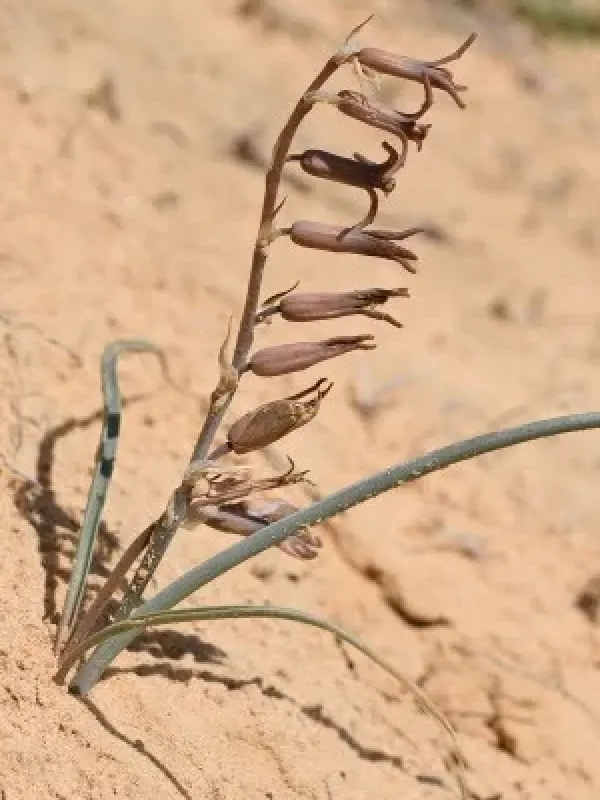
Botanically, it features a small bulb and narrow, grass-like leaves that appear shortly after rainfall. The inflorescence is a raceme with small, distinct flowers, which are the main diagnostic feature of the species within its natural habitat.
Given its extreme drought tolerance, researchers consider this species a potential genetic resource for breeding crops capable of surviving in desertification-prone areas. Its ability to tolerate low soil quality is a critical aspect of its potential agricultural utility.