
Dipcadi bakeriana
Dipcadi bakeriana
Description
Growing requirements
Dipcadi bakeriana is a perennial bulbous plant belonging to the Asparagaceae family. Native to the arid regions of Southern Africa, this species has evolved to thrive in environments characterized by limited rainfall and nutrient-poor, sandy soils.
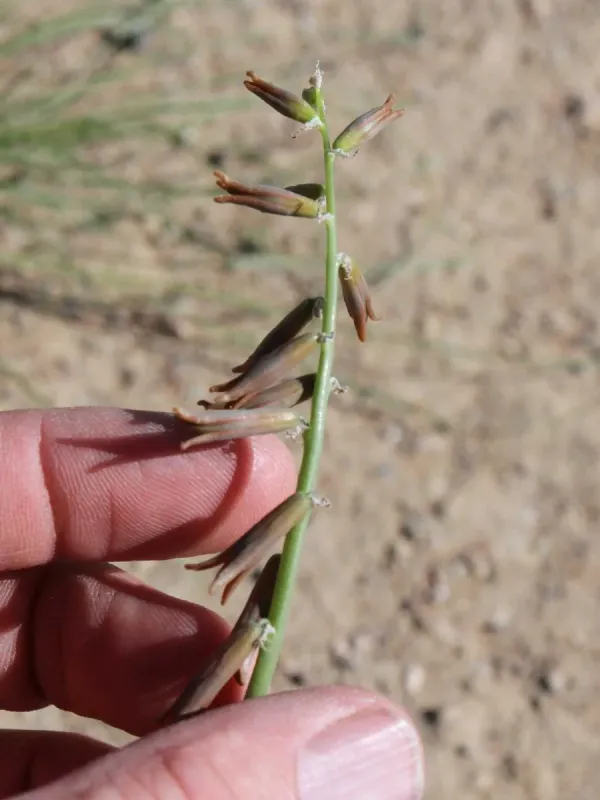
The plant features a subterranean bulb that acts as a vital storage organ for moisture and nutrients, allowing it to survive prolonged dry spells. The leaves are typically narrow and basal, designed to reduce transpiration, while the inflorescence bears characteristic nodding flowers.
Successful cultivation requires highly porous, sandy substrates that ensure excellent drainage. In agronomic or horticultural settings, avoiding waterlogging is the most critical factor, as excessive moisture around the bulb can cause fungal infections and decay within a very short period.
Regarding climate, the plant requires high solar exposure to maintain vigorous growth and trigger the reproductive phase. It is well-adapted to hot temperatures but demands a clear separation between a growth season, supported by occasional watering, and a dry dormant season.
The primary economic use of Dipcadi bakeriana is strictly ornamental. It is sought after by botanical gardens and plant enthusiasts for its unique aesthetic, particularly suitable for rock gardens or greenhouse collections that mimic arid desert environments.