
Dipcadi serotinum
Dipcadi serotinum
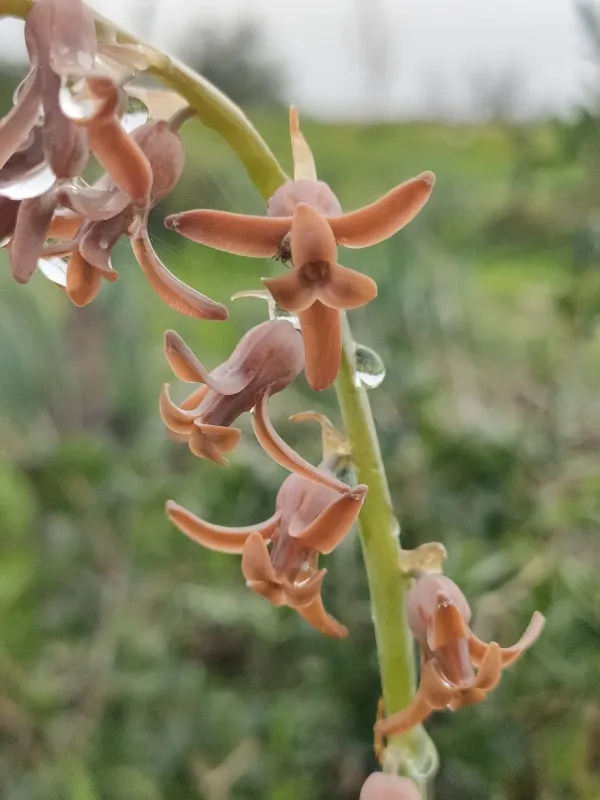
Description
Growing requirements
Dipcadi serotinum is a perennial bulbous plant belonging to the Asparagaceae family. Native to the Mediterranean region, it typically inhabits dry, sunny slopes, arid grasslands, and rocky terrains where other plants struggle to survive.
The plant thrives in well-drained, sandy or gravelly soils with a neutral to slightly alkaline pH. It is highly adapted to summer dormancy, during which it requires minimal moisture to avoid bulb rot.
Cultivation requires full sunlight to ensure proper photosynthesis and energy storage in the bulb. In regions with high humidity or rainfall, raised beds or sloped planting sites are essential to facilitate rapid water runoff.
The plant prefers a climate with mild, wet winters and hot, dry summers. In temperate regions, it is often grown in containers or greenhouses, providing a controlled environment that mimics its natural habitat.
Botanically, it is recognized by its linear leaves and slender racemes of bell-shaped, brownish or greenish-yellow flowers. It is an interesting addition to xeriscaping or rock gardens where specific soil conditions can be strictly maintained.
Main diseases and pests
The primary threat to this species is waterlogging. Excessive moisture in the soil, especially during the dormant season, leads to fungal infections and rapid decay of the bulb, which is often fatal to the plant.
Pests such as bulb mites and various species of flies that target bulbous crops can significantly damage the subterranean organs. Proper quarantine of new bulbs before planting is a crucial preventive measure.
Fungal pathogens like Fusarium can cause root and bulb rot. To manage these, growers should ensure strict water management and use sterile planting media if cultivating in pots or greenhouses.
Mechanical damage to the bulb during planting or division can provide entry points for pathogens. Handling bulbs with care and allowing cut surfaces to dry before planting can reduce infection risks.
Weed competition is not a major issue in its natural arid habitat, but in cultivated settings, weeds can retain moisture near the soil surface. Keeping the area clear helps maintain the dry conditions the bulbs prefer.