
Dipcadi glaucum
Dipcadi glaucum
Description
Growing requirements
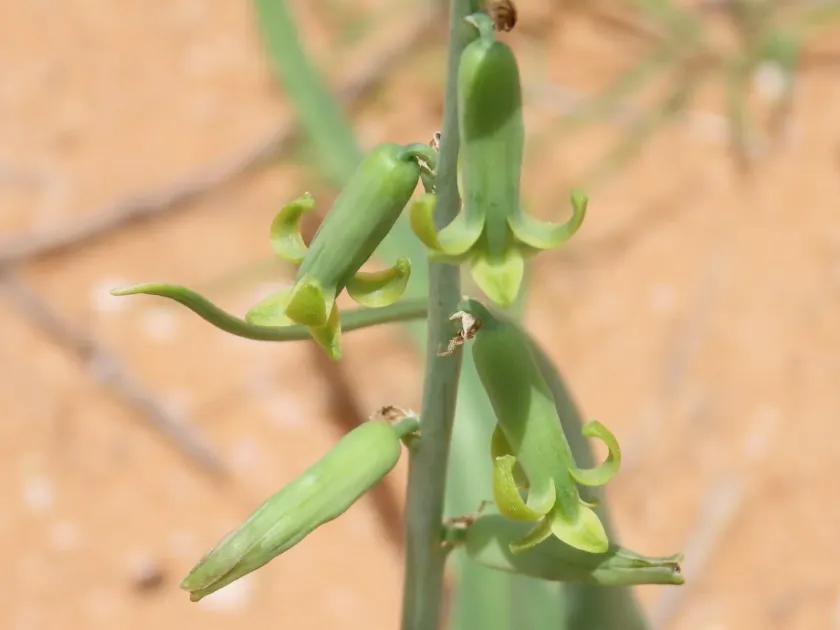
Dipcadi glaucum is a perennial bulbous plant belonging to the Asparagaceae family. It is characterized by its distinct glaucous leaves, which adapt it to survive in intense solar radiation environments.
The native range of this species covers the arid regions of Southern Africa, including Botswana and Namibia. The plant has evolved specifically for life in sandy soils and semi-desert environments where water availability is extremely low.
Soil requirements for this crop are strict; it necessitates well-drained, porous, and sandy substrates. Any condition that promotes waterlogging in the root zone will almost inevitably result in the decay of the bulbs.
In terms of climate, the plant thrives in high-temperature environments. It possesses an efficient dormant mechanism that allows it to survive extreme drought cycles without perishing, resuming growth when moisture becomes available.
While not a traditional broad-acre crop, Dipcadi glaucum has niche uses in local ecosystems. It serves as a study subject for xerophytic agriculture, and its potential is being explored in drought-resilient land management strategies.
Main diseases and pests
Fungal pathogens associated with soil moisture are the primary threats to the health of Dipcadi glaucum. Pathogens such as Fusarium species can rapidly compromise the bulb structure if drainage is inadequate.
Soil-borne pests, particularly nematodes and various beetle larvae, pose a significant risk to the root system. These pests can cause systemic damage, leading to stunted growth or total plant failure within the crop.
Mammalian pests, such as rodents, represent a major concern during dry seasons. They frequently target the moisture-rich bulbs, which can destroy standing populations if not managed with proper fencing or deterrents.
Leaf-sucking insects like thrips can infest the foliage, leading to reduced vitality. Since the plant relies on a limited leaf area for photosynthesis, any infestation directly impacts the energy storage in the bulb.
Integrated pest management involves monitoring soil health and ensuring environmental conditions do not favor the proliferation of rot-inducing fungi, as chemical intervention is usually impractical for this type of culture.