
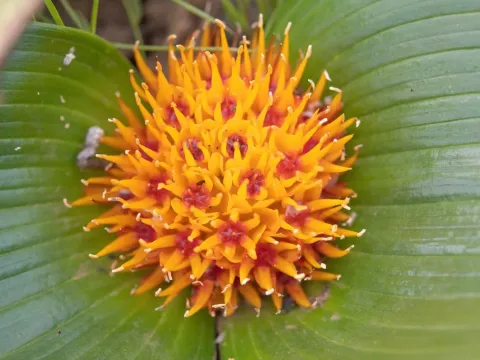
Daubenya
Daubenya
Daubenya is a genus of rare perennial bulbous plants belonging to the Asparagaceae family. Native primarily to the arid regions of South Africa's Cape Province, these plants have evolved specific biological adaptations to survive in extreme environments.
What the section contains


Daubenya
The plant is characterized by a subterranean bulb that enables survival during prolonged summer droughts. Its leaves are typically few in number and lie flat against the ground, an adaptation to intense sunlight typical of desert plateaus.
Successful cultivation of Daubenya requires a well-drained, sandy soil with low organic content, mimicking their natural habitat. Water stagnation in the root zone is lethal; therefore, when grown in pots, a thick drainage layer of expanded clay is strictly necessary.
Climate requirements include bright, direct sunlight during the growing season and a dry dormant period at elevated temperatures. In temperate climates, this plant must be grown exclusively in greenhouses or conservatories with strictly controlled environmental parameters.
The economic use of Daubenya is limited to ornamental floriculture and botanical collections. Due to its scarcity and propagation challenges, the crop holds no industrial agricultural value but is highly esteemed by plant enthusiasts and botanical institutions.
The primary threat to Daubenya is root and bulb rot, often triggered by improper watering schedules and poor soil drainage. Excessive moisture during the dormancy phase causes rapid decay of the bulb tissues.
Common pests encountered in greenhouse environments include mealybugs and spider mites. These insects proliferate quickly in dry air, necessitating regular visual inspections of the leaf surfaces to prevent infestations.
Disease prevention relies heavily on strict adherence to watering cycles: all irrigation must cease immediately after foliage yellowing. Systemic fungicides should only be applied upon detection of early signs of fungal bulb infections.
Pest populations can be managed using mild insecticides or manual removal with a dampened cloth. It is crucial to avoid saturating the growing medium immediately following any chemical treatment.
To prevent the spread of viral infections, which can occasionally affect wild species, all gardening tools must be sanitized thoroughly. High-quality, disease-free planting stock is the foundation for successfully growing this rare African genus.