
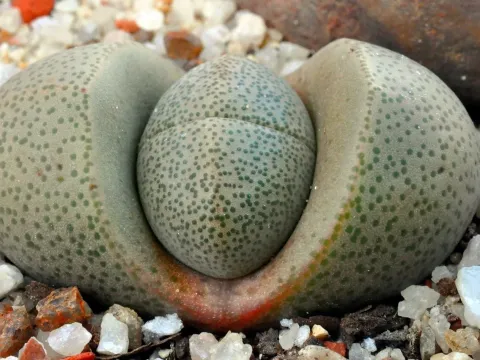
Pleiospilos
Pleiospilos
Sowing Pleiospilos seeds is best performed during the early spring to maximize the utilization of natural light as the days grow longer. This timing ensures that young seedlings establish a healthy root system before the onset of the dormant phase.
What the section contains


Pleiospilos
The ideal germination substrate consists of a sterile mixture of fine sand and perlite. Seeds should be sown on the surface and pressed lightly into the medium; burying them deep prevents successful emergence due to their small size.
Maintain a constant temperature between +20 °C and +25 °C using a heating mat or a warm location. Covering the container with transparent plastic helps retain humidity while the seeds are in the process of germinating.
Once germination occurs, gradually increase ventilation to harden off the seedlings. It is crucial to move them to individual containers only after they have reached a sufficient size to handle transplanting without damaging their sensitive roots.
Watering at the seedling stage should be minimal and carefully controlled. Overwatering during the first few weeks is the most common cause of seedling mortality in Aizoaceae species.
Pleiospilos, a member of the Aizoaceae family, is a succulent native to the arid environments of South Africa. It has evolved unique biological mechanisms to store water in its thick, stone-like leaves to survive prolonged droughts.
This plant thrives in high-intensity sunlight throughout the year. In indoor settings, it should be placed in the brightest window available, and supplemental lighting is highly recommended during the winter months to prevent etiolation.
The substrate must be extremely well-draining, mimicking the rocky, mineral-rich soils of its native habitat. A mixture consisting of 70% mineral components like pumice, grit, and coarse sand is far superior to any peat-based compost.
Temperature control is vital for successful cultivation. While they prefer warm summers, they require a distinct cool period during winter dormancy, ideally kept between +10 °C and +15 °C with minimal water.
Watering practices must be disciplined; allow the substrate to dry out completely between sessions. During the dormant winter season, water should be withheld entirely unless the leaves show significant signs of shriveling.
Root rot and crown rot are the primary threats to Pleiospilos, usually resulting from inadequate drainage or excessive watering. Once tissue decay begins, it is often difficult to save the plant.
Common pests include mealybugs, which lodge in the crevices between the leaves. Because of the plant's texture, these pests can be difficult to spot until they have established a significant population, necessitating systemic insecticides.
Spider mites are another concern, particularly in environments with poor airflow. They feed on the plant's epidermis, causing unsightly discoloration and reducing the overall vigor of the succulent.
Sunburn can occur if the plant is moved from a low-light environment to direct sunlight too quickly. Always acclimate the plants gradually in the spring to avoid damaging the outer tissues.
Effective pest management relies on early detection and preventative maintenance, including regular inspections of the leaf bases and ensuring adequate air circulation at all times.