
Pleiospilos bolusii
Pleiospilos bolusii
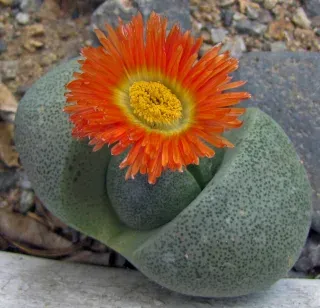
Description
Sowing dates
Sowing Pleiospilos bolusii seeds is best done in the spring when daylight increases. A consistent temperature of 20–25 degrees Celsius is crucial for high germination rates of this desert species.
Seeds should be placed on a well-draining, sandy substrate and only slightly pressed into the surface. Covering the container with a transparent cover helps maintain the high humidity required for the initial sprouting stage.
Daily aeration of the seed tray is mandatory to prevent the development of damping-off fungi. Once the seedlings emerge, the cover should be removed gradually to acclimatize them to lower humidity levels.
Transplanting seedlings is a delicate process that should be delayed for at least a year. The roots are fragile and require a well-developed root system before they can handle repotting into individual containers.
Young plants need slightly more attention regarding moisture than mature ones, but overwatering remains the most common mistake that leads to rapid rot of the developing seedlings.
Growing requirements
Pleiospilos bolusii belongs to the Aizoaceae family and is native to the arid regions of South Africa. It is a remarkable succulent that has evolved to mimic surrounding rock structures to avoid herbivory.
The plant thrives under intense sunlight and requires high light intensity to maintain its characteristic compact shape. In domestic cultivation, southern exposure is usually necessary for optimal growth.
Soil requirements are strict: the medium must be highly porous and inorganic. A mixture of gravel, coarse sand, and a minimal amount of potting soil is ideal to ensure fast drainage and prevent water retention.
Watering must follow a strict cycle: water only when the growing season is active and the soil is completely dry. During the winter dormancy period, watering should be suspended almost entirely to mimic natural drought.
This succulent prefers a dry, warm environment with excellent air circulation. High humidity combined with low temperatures is lethal, often causing the plant to burst or rot from the inside out.
Main diseases and pests
Root rot caused by excessive moisture is the primary threat to the health of Pleiospilos bolusii. When the roots are saturated for too long, they lose their ability to function, leading to rapid decay of the plant's succulent tissues.
Mealybugs are the most common pests, often nesting deep within the cleft between the leaves. They are difficult to detect early, so close inspection of the plant's core is necessary during routine care.
Spider mites can become a nuisance in poorly ventilated conditions. These pests cause discoloration and scarring on the surface of the plant, which permanently ruins its aesthetic appearance as a living stone.
Prevention involves maintaining good airflow and using clean, sterile soil for every repotting. Regular use of preventive systemic insecticides can help keep the plant free from common succulent pests.
If an infection or pest outbreak occurs, immediate isolation is required to protect other plants. Use only specialized products designed for succulents to treat affected areas without damaging the delicate epidermis.