
Pleiospilos nelii
Pleiospilos nelii
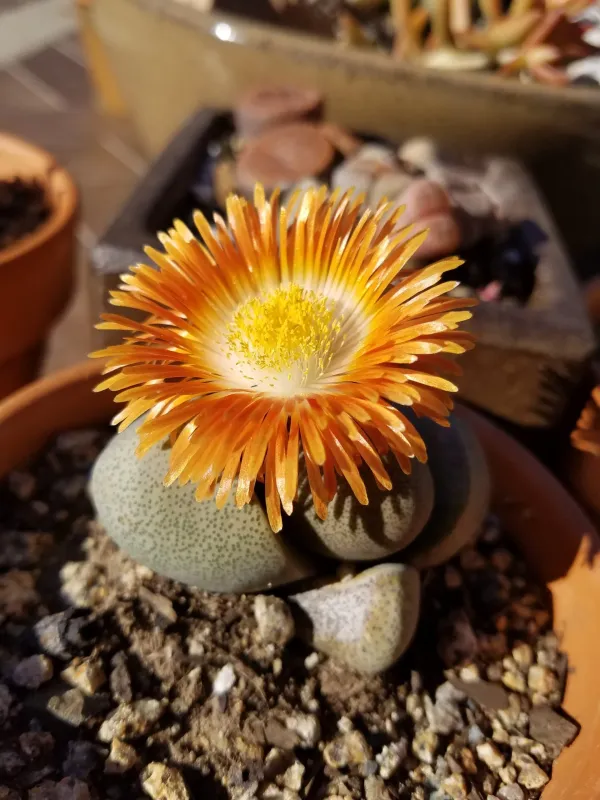
Description
Sowing dates
Sowing seeds of Pleiospilos nelii is best conducted during the spring months to leverage increasing daylight, which is essential for uniform germination.
A sterile, well-draining substrate comprised of coarse horticultural sand, pumice, and a small amount of potting soil is optimal for initial development.
The seeds should be sown shallowly and covered with a fine layer of grit to maintain stability while ensuring sufficient airflow around the emerging seedlings.
Constant moisture must be provided during the first few weeks, ideally using a misting system or bottom watering, while keeping temperatures between +22°C and +25°C.
Once seedlings have developed their first true leaf pair, they require a gradual reduction in humidity to encourage root strengthening and hardening of the epidermis.
Growing requirements
Belonging to the family Aizoaceae, this species is native to the arid regions of South Africa, where it has evolved to mimic surrounding gravel.
The plant requires high levels of solar radiation; maintaining high light intensity is crucial to prevent etiolation and ensure the development of its distinct, rock-like form.
Agrotechnical management must prioritize a distinct seasonal cycle, with strict irrigation schedules that prevent moisture accumulation within the leaf tissue.
Soil composition must be highly mineral, with a pH ranging from neutral to slightly acidic, ensuring excellent drainage properties for all cultivation containers.
Temperature management is vital: while the species tolerates high heat, it requires a significant cooling period during winter dormancy to promote longevity.
Main diseases and pests
The primary risk to Pleiospilos nelii is bacterial and fungal rot, triggered by poor ventilation or stagnant water trapped between the succulent leaves.
Mealybugs are the most common pests that infest the plant, often hiding deep within the central fissure where they feed on plant juices.
Spider mites may occur in low-humidity environments, potentially causing disfigurement and a reduction in the plant's overall vitality and growth rate.
Prevention relies on good air circulation and vigilant irrigation control, ensuring the substrate dries out completely between watering sessions.
Chemical treatments should be used sparingly; systematic insecticides are generally preferred, applied directly to the soil or in diluted form to avoid damage.