
Ebracteola fulleri
Ebracteola fulleri
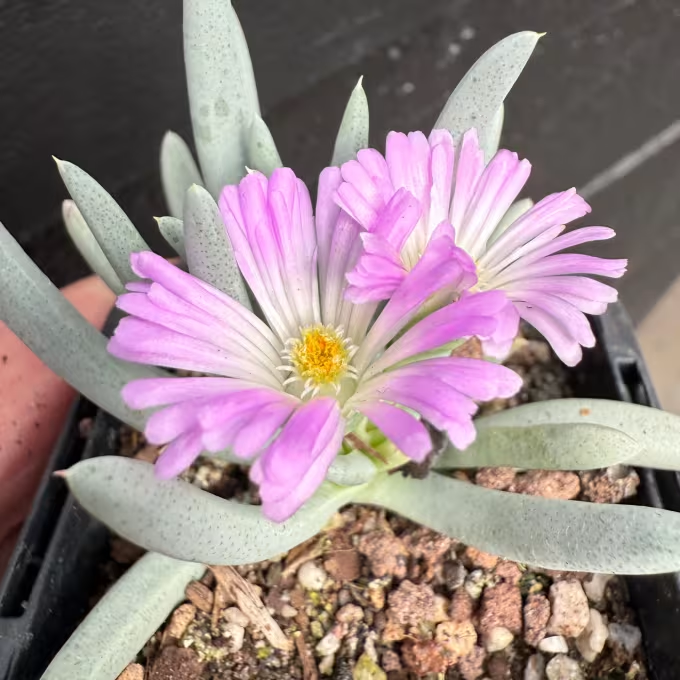
Description
Sowing dates
Propagation of Ebracteola fulleri is most effectively achieved through seeds or vegetative cuttings. Seeds should be sown in late spring or early summer into a well-draining substrate consisting of coarse sand and mineral-based potting soil.
For successful germination, a stable temperature range of 20–25 degrees Celsius and high light levels are essential. Seeds should be lightly covered with fine sand to maintain surface humidity without creating a risk of rot for the delicate seedlings.
Cuttings are often preferred for maintaining the plant's specific growth characteristics. Cuttings must be taken with a sterile tool and allowed to dry in a shaded, well-ventilated area for several days to form a callus before planting.
Young plants should be placed in small, shallow pots, as the root system of this species is sensitive to waterlogging and requires a confined space to prevent excessive moisture retention.
Acclimatization of young plants is a crucial step for long-term health. Once established, seedlings should be gradually introduced to direct sunlight, and watering frequency should be reduced to match the needs of mature specimens.
Growing requirements
Ebracteola fulleri belongs to the Aizoaceae family and is an specialized succulent adapted to harsh, arid environments. Native to the rocky regions of Southern Africa, it thrives in soils with very low organic content and high mineral composition.
The primary requirement for this species is maximum intensity light. Without sufficient sunlight, the plant becomes etiolated, losing its natural compact shape and becoming highly susceptible to fungal infections.
Cultivation requires a growing medium composed of 70–80 percent mineral components. Mixtures based on gravel, perlite, and a small portion of loam are ideal, as they facilitate rapid drainage and prevent the roots from remaining damp.
During the active growing season, temperatures between 22 and 30 degrees Celsius are optimal. During the winter dormancy period, the plant requires cooler temperatures between 10 and 15 degrees Celsius to trigger natural flowering cycles.
Watering must be strictly regulated and only performed when the soil has completely dried out. In winter, watering should be significantly reduced or stopped entirely to keep the roots dry and healthy during the dormant phase.
Main diseases and pests
The greatest threat to this plant is poor water management, which leads to root and stem rot. Excess moisture creates an environment where pathogenic bacteria and fungi can quickly destroy the plant's succulent structure.
Mealybugs are the most common pests, often concealing themselves within the fleshy leaf axils. If an infestation is detected, treatment with systemic insecticides or an alcohol-based solution is necessary to prevent significant damage.
Spider mites can also be a problem in environments with dry, stagnant air. To prevent mite outbreaks, it is essential to ensure proper ventilation and good airflow around the plants at all times.
Root mealybugs often go undetected until the plant begins to show signs of dehydration or stunted growth. If suspected, the plant should be removed from its pot to inspect the roots, and the soil should be replaced after cleaning the pot.
High humidity combined with poor airflow increases the risk of grey mold. To combat fungal pathogens, copper-based fungicides are recommended, alongside the immediate removal of all affected plant tissue to stop the spread of infection.