
Livingstone daisy
Cleretum bellidiforme
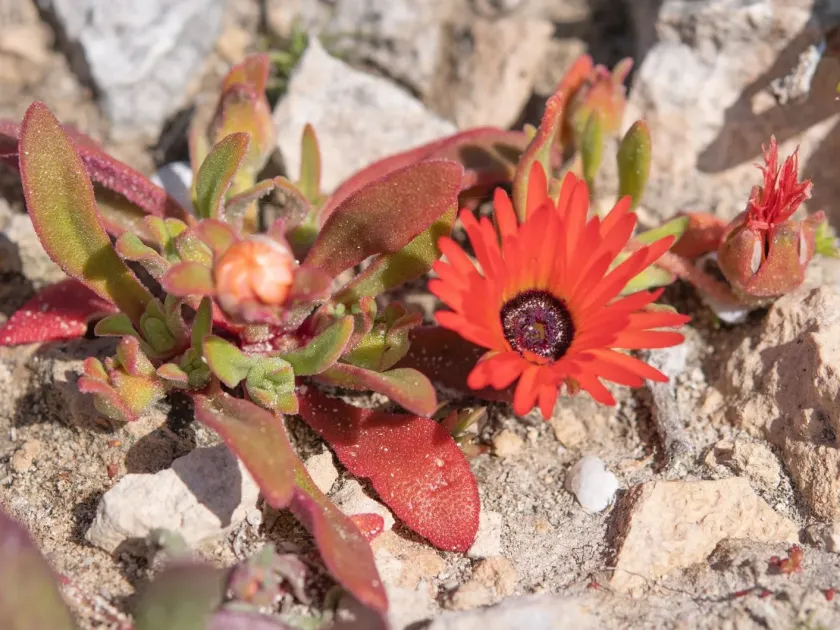
Description
Sowing dates
Sowing of Cleretum bellidiforme seeds is best performed in the spring season, once the danger of frost has completely passed and soil temperatures have risen.
For earlier flowering, growers should start seeds indoors in late winter or early spring, using well-drained seed-starting mix in shallow containers.
Seeds are extremely small and should not be covered with a thick layer of soil; they require surface sowing followed by light pressing to ensure seed-to-soil contact.
Germination typically occurs within two weeks under conditions of adequate light and stable temperatures ranging between 18 and 22 degrees Celsius.
Transplanting seedlings into individual cells helps minimize root disturbance, ensuring the plants establish successfully when transferred to their permanent garden locations.
Growing requirements
Livingstone daisy is a member of the Aizoaceae family, originating from arid regions of South Africa where it thrives in sandy, nutrient-poor soils.
The plant strictly requires full sun exposure to trigger flowering; in partial shade, the stems become leggy, and the vibrant blooms fail to open properly.
Soil structure must be predominantly gritty or sandy to allow for rapid drainage, as this species cannot tolerate waterlogged conditions for any extended period.
As a succulent, it exhibits impressive drought tolerance and should only be watered during prolonged dry spells, ensuring the surface dries out between irrigation events.
Fertilizer usage should be kept to a minimum, as high nitrogen levels encourage excessive vegetative growth that weakens the plant's overall resilience.
Main diseases and pests
The primary concern for Livingstone daisy cultivation is root and stem rot, which arises directly from poor soil drainage or excessive moisture levels.
During periods of high humidity or rain, the plants are susceptible to fungal pathogens that can cause rapid collapse of the foliage and stems.
Pests such as aphids or spider mites can occasionally affect the plants, especially in crowded garden settings or controlled greenhouse environments.
Maintaining proper spacing between individual plants is vital to improve airflow, which significantly reduces the risk of fungal outbreaks.
Regular monitoring of the base of the plants for early symptoms of decay allows for quick removal of affected stems before the entire specimen is compromised.