

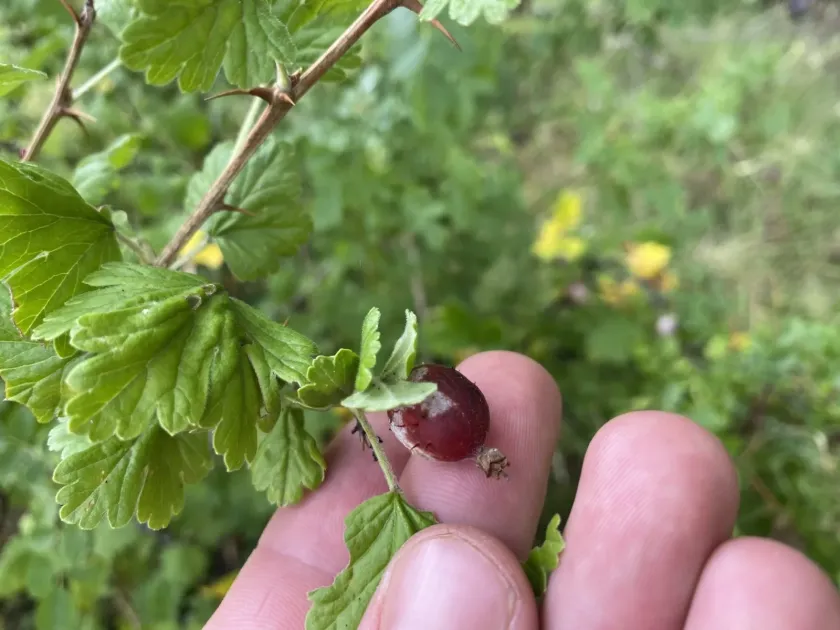
Description
Sowing dates
The gooseberry (Ribes uva-crispa L.) belongs to the Grossulariaceae family. It is a perennial deciduous shrub that breaks dormancy very early in the spring, often as soon as the ground thaws.
Planting is best performed in the autumn, typically between September and October, allowing the root system to establish itself before the onset of deep winter frosts. Early spring planting is a secondary option.
When selecting nursery stock, choose healthy one or two-year-old plants with robust root systems and 2–3 strong branches. Pruning the roots slightly before planting can encourage new growth.
Space the bushes approximately 1.2 to 1.5 meters apart within the rows, maintaining a distance of 2.5 meters between rows to ensure adequate airflow and ease of maintenance.
After planting, it is essential to prune the aerial parts of the bush, leaving only 3–4 buds per stem. This structural pruning encourages the plant to branch out and form a productive habit.
Growing requirements
Gooseberries thrive in full sunlight. While they can tolerate partial shade, insufficient light often results in smaller berries and a higher risk of fungal issues due to poor evaporation.
The ideal soil is fertile, well-draining loam or sandy loam with a neutral pH. The plants are sensitive to waterlogging and will struggle in heavy clay soils or areas with poor natural drainage.
Organic matter such as compost or well-rotted manure should be incorporated into the planting site to provide long-term soil structure and essential nutrients.
Gooseberries require protection from cold, drying winds. Planting them near hedges or building walls can provide a microclimate that benefits the development of the bush.
Consistent moisture is vital, especially during the berry-filling stage. Irrigation should be deep and regular, particularly during dry spells, to prevent premature fruit drop.
Yield
Yields vary depending on the variety and cultural practices. A healthy, mature gooseberry bush can produce between 5 and 10 kilograms of fruit per season, depending on the cultivar.
The period of peak production usually occurs when the shrub is between 5 and 9 years old. Regular pruning is necessary to rejuvenate the plant and maintain high yields over time.
Gooseberries are versatile in the kitchen, widely used for jams, jellies, pies, chutneys, and desserts. They are prized for their unique balance of tartness and sweetness.
The berries are high in vitamin C, fiber, and various antioxidants. They are considered a nutritious addition to any diet and have a long history of use in traditional preserves.
To ensure high production, maintain a balanced nutrient program that includes potassium and phosphorus, which are critical for berry size and quality.
Main diseases and pests
American gooseberry mildew (Sphaerotheca mors-uvae) is the most significant threat. It appears as a white powdery coating on leaves and fruit, often leading to stunted growth.
Insect pests such as the gooseberry sawfly, aphids, and the gooseberry fruit borer can cause substantial damage to the leaves and developing fruit if left unmanaged.
Integrated pest management, including regular inspection and the removal of infected plant material, is essential for maintaining bush health without excessive chemical intervention.
Good air circulation through proper pruning is one of the best preventative measures against fungal pathogens, as it keeps the center of the bush dry.
In cases of severe infestation, targeted applications of fungicides or insecticides may be necessary during the dormant season or post-harvest.
Harvesting
Harvest timing depends on the intended use. For cooking and preserves, berries are often picked when they are still firm and slightly under-ripe to retain pectin.
For fresh consumption, allow the berries to ripen fully on the bush until they soften and develop their full sweetness and characteristic color.
Always harvest during dry weather to ensure longevity and reduce the risk of mold. Handle the berries gently as they are thin-skinned and bruise easily.
Stored berries should be kept in a cool, well-ventilated area. Washing should be avoided until just before consumption to prevent premature spoilage.
Post-harvest care involves clearing debris from under the bushes and applying fertilizer to help the plant recover and prepare for the next season's growth.
Content graph
Connections · Gooseberry
Most often together:
Marketplace
Products · 80


COMPLEX ORGANIC-MINERAL FERTILIZER «COMPLEX+»
LISICHANSKY JELATINOVOY ZAVOD, TDB
Fertilizers
0
0
·
36
1 offer
1.03 €per 1 kg
Buy


