
Gooseberry
Ribes uva-crispa L. var. reclinatum (L.) Berl.
Description
Sowing dates
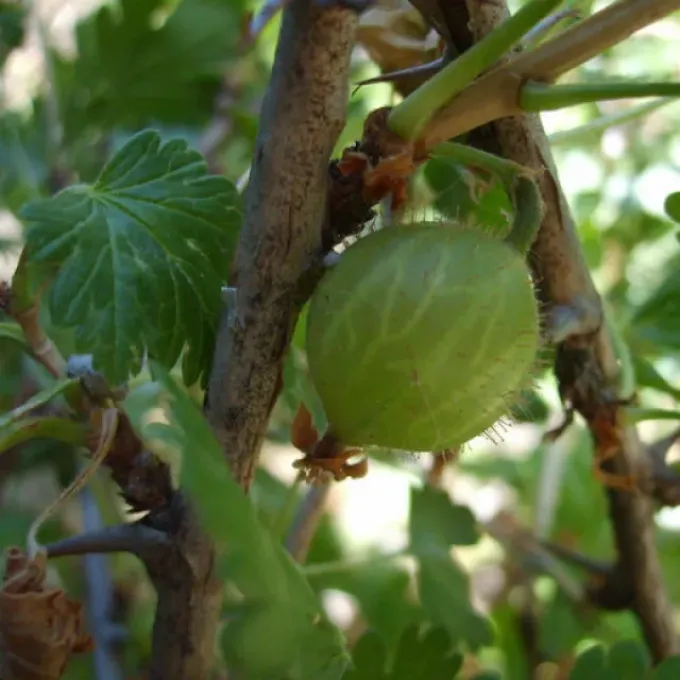
The gooseberry (Ribes uva-crispa L. var. reclinatum) is a deciduous shrub belonging to the Grossulariaceae family, originating from parts of Europe and Western Asia.
Planting is best performed in the dormant season, specifically autumn, to allow the root system to establish itself before the arrival of winter frosts.
If planting in spring, it must be done as early as possible, before the buds begin to break, to ensure the plant survives the transition to warmer weather.
Select a location with fertile, well-draining soil and exposure to full sun, as gooseberries perform best when they receive ample light and good air circulation.
Adequate spacing, typically around 1.5 to 2 meters between bushes, is essential to facilitate maintenance and prevent the development of foliage diseases.
Growing requirements
Gooseberries thrive in cooler temperate climates and are known for their cold hardiness, although they may require protection from late spring frosts.
Regular irrigation is vital, particularly during the fruit development stage, to ensure high yields and prevent the berries from shriveling during dry spells.
Soil management involves annual applications of organic mulch and compost to retain moisture and provide essential nutrients throughout the growing season.
Pruning is a critical agrotechnical practice performed annually to remove old, weak, and crossing branches, which keeps the shrub productive and disease-free.
The plant prefers slightly acidic to neutral soil; excessive moisture must be avoided, as waterlogged conditions can lead to root rot and other physiological issues.
Yield
With proper care, a mature gooseberry bush can produce between 5 and 10 kilograms of fruit per season, depending on the specific cultivar and environmental conditions.
The fruit is highly valued for culinary purposes, including the production of preserves, jams, pies, and refreshing beverages, due to its unique tart flavor.
Commercially, gooseberries are a niche crop that offers high value in local markets, especially when harvested at peak ripeness for direct consumption.
Nutritionally, the berries are rich in vitamin C, antioxidants, and dietary fiber, contributing to a healthy diet and immune system support.
Productive bushes can remain a staple in the garden for up to two decades, provided they receive consistent pruning and nutrient replenishment.
Main diseases and pests
The most significant pathological threat to gooseberries is American gooseberry mildew, which appears as a white, powdery coating on leaves and fruit.
Common pests include the gooseberry sawfly, aphids, and spider mites, which can significantly reduce plant vigor if not monitored and treated promptly.
- Pruning for air circulation
- Regular inspection of foliage
- Application of organic fungicides
- Mulching to suppress weed growth
Harvesting
Harvesting usually occurs in mid-summer, with timing depending on whether the berries are intended for culinary processing or immediate eating.
Berries picked early, while still firm and tart, are ideal for jams, while those left to ripen fully develop a sweet, succulent profile for fresh eating.