
Flowering currant
Ribes sanguineum Pursh
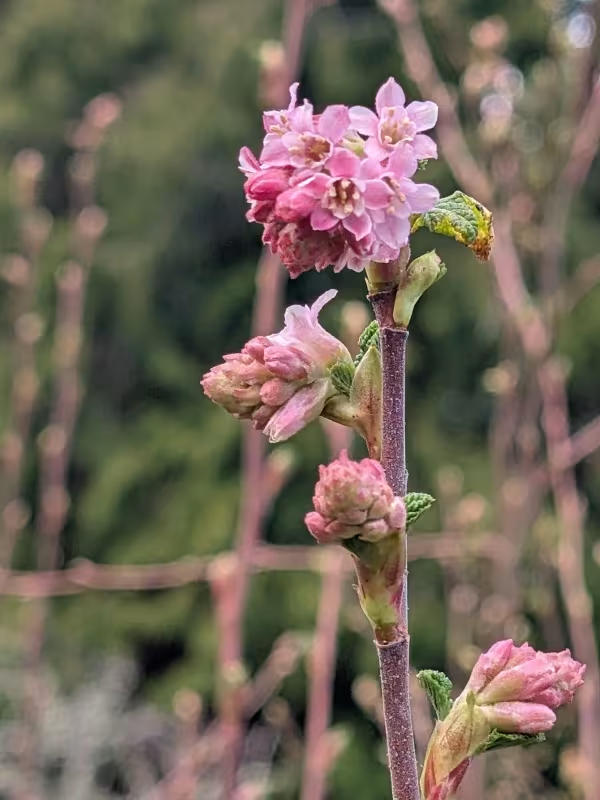
Description
Growing requirements
Flowering currant (Ribes sanguineum) is a member of the Grossulariaceae family. Native to western North America, this deciduous shrub is widely recognized for its stunning clusters of deep pink to red flowers that emerge in early spring.
The plant thrives in full sun to partial shade environments. In regions with very hot summers, afternoon shade is highly beneficial to prevent leaf scorch and maintain the plant's overall health and vigor throughout the growing season.
Soil requirements for this species include well-drained, fertile soil with a neutral to slightly alkaline pH. It does not tolerate waterlogged conditions, which can quickly lead to root rot; thus, raised beds or sloped sites are often preferred.
Agrotechnical maintenance involves consistent watering during the establishment phase and periods of drought. Pruning is essential; it should be performed immediately after the flowering period to encourage new growth for the next year.
Its primary use is in ornamental landscaping. It serves as an excellent choice for hedge plantings, foundation borders, or as a focal point in woodland gardens. The fruit, while technically edible, lacks the flavor profile of commercial currants.
Main diseases and pests
Common diseases affecting this shrub include powdery mildew and anthracnose. These fungal infections are more prevalent in stagnant, humid environments, making proper plant spacing a crucial part of preventative care.
Pests such as aphids, scale insects, and spider mites can infest the foliage. Monitoring the undersides of leaves during the spring and applying horticultural oils or appropriate insecticides can effectively manage these populations.