
Jostaberry
Ribes x culverwellii Macfarl.
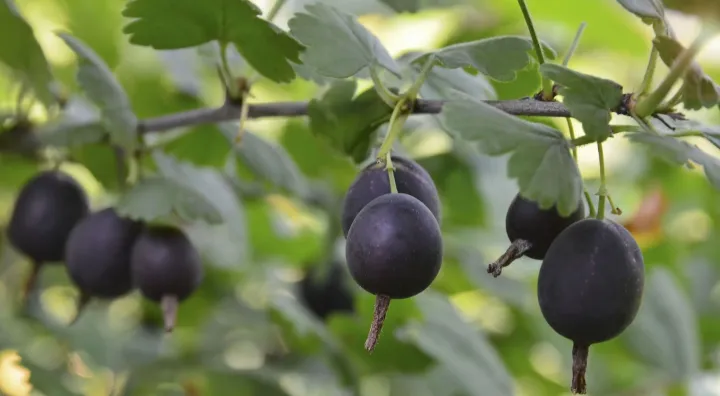
Description
Growing requirements
Jostaberry (Ribes x culverwellii) is a complex interspecific hybrid of blackcurrant and gooseberry, belonging to the Grossulariaceae family. This vigorous, thornless shrub is known for its tall, spreading habit and long-lived nature.
The plant thrives in full sun, which is essential for maximizing sugar content in the berries and ensuring healthy growth. While it tolerates partial shade, fruit production is significantly higher in bright, open environments with protection from strong prevailing winds.
The soil requirements involve deep, nutrient-rich, and well-drained loam. Avoid planting in areas prone to waterlogging or heavy clay soils, as the root system requires adequate aeration to prevent rot and ensure vigorous development of new canes.
Standard agronomic practice involves consistent mulching and balanced fertilization. During the early years, the focus is on structural pruning to develop a strong framework of branches, followed by annual maintenance pruning to remove old wood and maintain productivity.
Jostaberry is highly valued for its dual-purpose use: both as an ornamental hedge and a high-yield fruit crop. The berries are rich in vitamins and are commonly used in preserves, jellies, and fresh culinary applications due to their unique, tangy flavor.
Yield
A typical Jostaberry bush starts producing a reliable crop by the third or fourth year after planting. Yields are cumulative, increasing as the plant matures and expands its root mass and branch structure.
An established, mature shrub can yield between 5 to 12 kilograms of fruit per season under optimal conditions. Proper thinning of the canopy is essential to ensure light penetration, which directly impacts the size and ripening quality of the berries.
Main diseases and pests
Jostaberry is widely recognized for its superior disease resistance compared to its parent species. It is naturally resistant to powdery mildew, blackcurrant leaf spot, and the dreaded big bud mite, reducing the need for aggressive chemical spraying.
Despite this resilience, minor infestations of aphids or sawfly larvae can occur in specific climatic conditions. Proactive management and maintaining plant vigor through proper nutrition and hydration are the best defense strategies for a healthy plantation.
Harvesting
Harvesting is typically carried out over a period of 2 to 3 weeks as the fruits ripen gradually. The berries possess a firm texture, which makes them less susceptible to damage during picking compared to standard blackcurrants.
For storage and marketing, it is recommended to harvest the berries when they have developed their characteristic deep purple-black color but are still firm. They maintain quality well during short-term refrigerated storage, making them a viable commercial crop.