

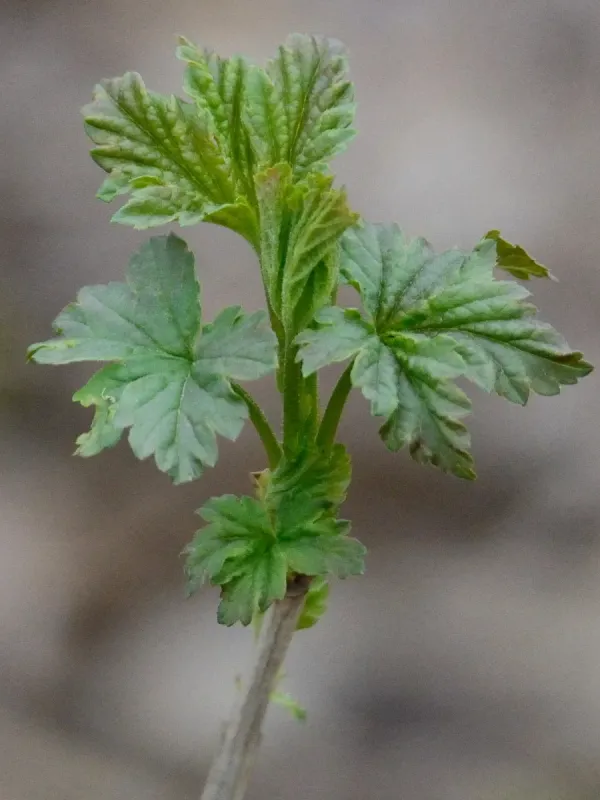
Description
Sowing dates
Blackcurrant (Ribes nigrum L.), a member of the Grossulariaceae family, is a deciduous shrub widely cultivated for its highly nutritious berries. The optimal time for planting is during the autumn dormancy, from September to November, allowing roots to establish before winter.
Early spring planting is also feasible, provided it is performed before the buds begin to break. Planting must be done early in the season to prevent transplant shock, which can stunt the growth of young bushes significantly.
When establishing a plantation, choose healthy, one- or two-year-old saplings with vigorous root systems. Space the bushes approximately 1.5 to 2 meters apart to ensure adequate airflow and sunlight penetration, which are vital for plant health.
During planting, it is recommended to bury the root crown about 5–8 cm deeper than it was in the nursery. This practice encourages the formation of new, strong shoots from the base of the plant, leading to a bushier structure.
Propagation is typically done through hardwood cuttings taken during the dormant season. These cuttings should be planted in well-prepared nursery beds or directly into their final location if the soil conditions are ideal.
Growing requirements
Blackcurrant thrives in regions with cool, temperate climates. The plant is moisture-loving and requires consistent soil hydration throughout the growing season, especially during fruit development.
The ideal soil is fertile, well-draining, and slightly acidic to neutral in pH. While they can tolerate various soil types, they perform best in loams or silty loams that are rich in organic matter.
Full sun is preferred for maximum yield, although the plants can tolerate partial shade in hotter regions. Protecting the site from strong, desiccating winds is crucial to prevent dehydration and winter damage.
Regular application of organic amendments like compost or well-rotted manure is essential for soil health. Nitrogen fertilizers should be applied in early spring, while phosphorus and potassium are vital for berry quality.
Mulching is a highly effective practice for blackcurrants. It suppresses weeds, retains soil moisture, and provides organic matter as it decomposes, which helps maintain stable temperatures for shallow roots.
Yield
The yield of blackcurrant bushes varies based on variety, site conditions, and age. Under intensive commercial management, yields can range from 10 to 15 tonnes per hectare depending on the cultivation system.
In home gardens, a well-managed mature bush typically yields 3–5 kg of berries. Productivity peaks when the plant is between 4 and 7 years old, provided a strict pruning schedule is maintained.
Strategic pruning is necessary to remove older, less productive wood. Aim to remove branches older than 4–5 years to prioritize the growth of younger, more vigorous shoots that bear the largest berries.
Inadequate watering during the fruit-setting stage is a major cause of yield loss. Implementing a reliable irrigation system, such as drip lines, is the most effective way to ensure uniform fruit size and prevent premature dropping.
Blackcurrants are highly valued for their high concentrations of vitamin C, anthocyanins, and other antioxidants, making them a staple in both the nutraceutical and food processing industries.
Main diseases and pests
The big bud mite is a significant pest that causes buds to swell and fail to open. Control measures involve removing and burning infected branches as soon as they are spotted in early spring.
Powdery mildew is a common fungal disease that manifests as a white, dusty coating on leaves and fruit. Maintaining proper spacing and using resistant cultivars are the primary methods of prevention.
The currant clearwing moth is a notorious borer pest that tunnels into the stems. Infested branches show signs of wilting and must be pruned back to healthy wood and destroyed immediately.
Anthracnose, caused by fungi, leads to premature leaf drop, which weakens the plant over several seasons. Removing and composting fallen leaves is critical to breaking the disease cycle in the garden.
Aphids and various sawfly species can also cause significant damage by feeding on foliage. Regular scouting during the growing season allows for early intervention before pests reach destructive levels.
Harvesting
Harvesting blackcurrants generally takes place from mid-July to August, depending on the cultivar. Berries should be picked only when they have achieved a full, uniform black color and a sweet, intense flavor.
The berries do not ripen all at once on the same bunch, but for fresh market sales, they are often picked by hand as whole strigs. For industrial purposes, varieties with concentrated ripening are preferred.
Harvesting should be performed in dry conditions to minimize the risk of mold growth during transport or storage. Berries are delicate and should be placed in shallow containers to prevent crushing.
Post-harvest, the fruit must be rapidly cooled to remove field heat, which extends shelf life. Storing the berries at 0 to +2°C is optimal for keeping them in fresh condition for several days.
Frozen storage is the industry standard for blackcurrants, as the berries maintain their nutritional integrity and flavor profile excellently. This allows for year-round availability for jam, juice, and ingredient production.
Content graph
Connections · Blackcurrant
Most often together:
Marketplace
Products · 11


Complex Microfertilizer «Urozhay»
Enzym Company, JSC
Fertilizers
0
0
·
38
41 offer
3.28 €per 1 kg
Buy
