
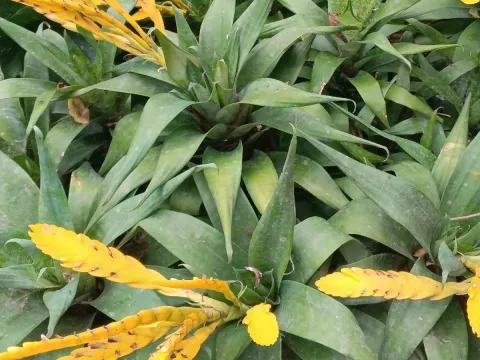
Goudaea
Goudaea
Goudaea is primarily propagated via offshoots or pups that emerge from the base of the parent plant during its active growth cycle.
What the section contains


Goudaea
The ideal time for division is during the early spring months, which allows the new plantlets to establish roots before the winter dormancy.
While seed propagation is possible, it requires a controlled greenhouse environment with high humidity and stable temperatures.
Seeds should be sown on the surface of a fine-textured, moisture-retentive peat-based medium without being deeply buried.
Consistent moisture levels are critical during the germination phase to ensure a successful transition to the seedling stage.
This genus belongs to the Bromeliaceae family and naturally occurs in tropical habitats, favoring consistent warmth and humidity.
The substrate must be well-draining, typically consisting of a mix of bark, perlite, and high-quality peat to prevent root asphyxiation.
Indirect bright light is necessary for healthy development; harsh direct afternoon sun can severely damage the plant's delicate foliage.
Watering involves keeping the central rosette filled with clean water, which should be refreshed periodically to avoid stagnation.
Optimal growth occurs when ambient humidity is maintained between 60% and 75%, often requiring artificial misting in indoor environments.
Mealybugs and scale insects are the most common pests affecting this culture, often colonizing the inner surfaces of leaf bases.
Root rot is a significant threat caused by overwatering or soil mixes that lack sufficient aeration for the root system.
Fungal infections can manifest as dark spots on leaves, usually triggered by poor air circulation and excessive dampness in the environment.
Integrated pest management, including the use of mild horticultural soaps, is effective for controlling minor infestations of insects.
Maintaining a clean, hygienic growing area significantly reduces the risk of pathogens and ensures the plant remains healthy and vigorous.