
Goudaea ospinae
Goudaea ospinae
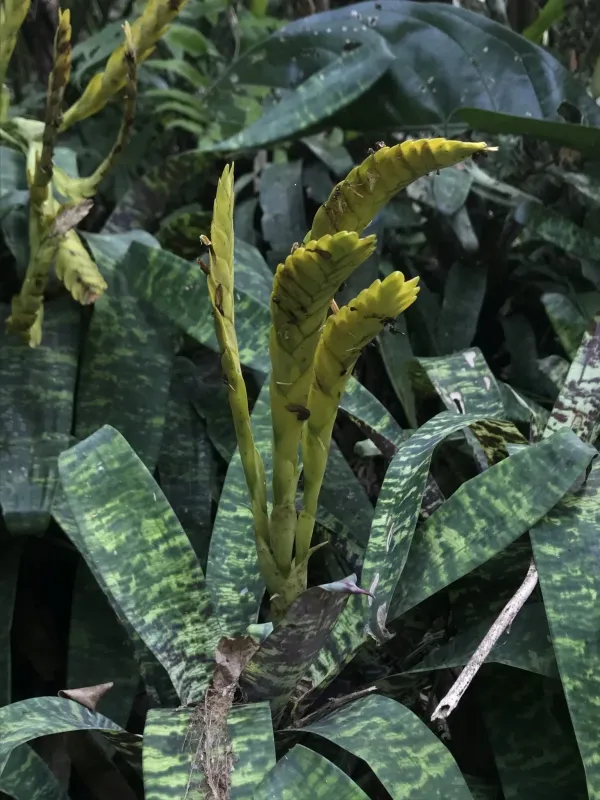
Description
Growing requirements
Goudaea ospinae is a perennial herbaceous plant belonging to the Bromeliaceae family. Originally native to the tropical rainforests of Colombia, this species has evolved to thrive as an epiphyte, often found growing on tree trunks or in rocky crevices.
The plant is defined by its striking rosette of stiff, leathery leaves, which function as an efficient system for harvesting moisture and nutrients directly from the humid tropical air.
Successful cultivation requires a climate that mimics its natural habitat, maintaining temperatures between 20°C and 28°C and high relative humidity to support healthy physiological processes.
The growing medium must be highly porous and well-draining, typically consisting of bark, sphagnum moss, charcoal, and perlite to prevent the roots from suffocating and ensure proper gas exchange.
Regarding light requirements, Goudaea ospinae thrives in bright, filtered light. Exposure to intense, direct sunlight can result in leaf scorching and structural damage to the rosette.
Yield
Goudaea ospinae is primarily cultivated for ornamental purposes, being a prized specimen in professional botanical collections and high-end indoor plant nurseries.
The cultural value of the plant lies in its distinct inflorescence, which offers a long-lasting aesthetic appeal, making it a sought-after subject for conservatory displays.
Commercial availability remains limited due to the specific conditions required for propagation and growth, ensuring its status as a rare and desirable species among collectors.
Propagation is generally achieved through vegetative offsets, known as pups, which develop at the base of the parent plant once the main flowering cycle is completed.
While not a traditional food crop, the plant holds significant value for ex-situ conservation efforts and botanical research focused on the biodiversity of the Bromeliad family.
Main diseases and pests
The most significant threat to the health of Goudaea ospinae is the onset of root and crown rot, which occurs if the substrate remains waterlogged for extended periods.
Common pests include mealybugs, scale insects, and spider mites, which can infest the tight crevices of the leaf rosettes and extract essential plant fluids.
Effective pest management relies on early detection and maintaining high air circulation, which prevents the build-up of stagnant air and minimizes the risk of insect colonization.
The quality of water is paramount, as chlorine and high mineral content in tap water can lead to salt accumulation in the tissues and stunted growth patterns.
Using softened or rain water, combined with periodic flushing of the growing medium, is recommended to keep the plant vigorous and free from physiological stress.