
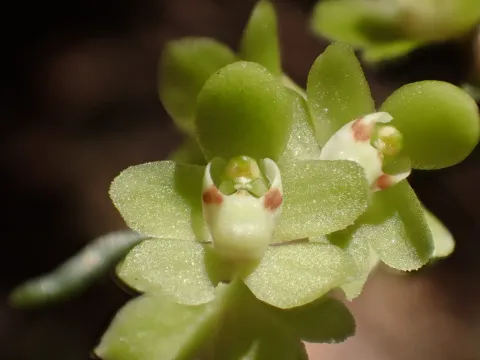
Chiloschista
Chiloschista
Chiloschista belongs to the Orchidaceae family and is a unique genus of leafless epiphytic orchids. In their natural habitat, these plants thrive in the tropical rainforests of Southeast Asia, including India, Thailand, and the Philippines, typically attaching themselves to tree trunks.
What the section contains


Chiloschista
This species has strict climatic requirements, preferring high atmospheric humidity levels between 70% and 80%. Proper air circulation is critical to prevent moisture stagnation within the root system and the subsequent development of fungal infections.
The optimal temperature range for active growth is between +22°C and +28°C during the day, with a mandatory night drop of 4–6 degrees. The plant is sensitive to sudden temperature fluctuations and requires a stable, controlled environment to flourish.
For cultivation, mounts made of pine bark or cork are used instead of pots and traditional soil. Since the roots of Chiloschista perform photosynthesis in place of leaves, the plant demands bright, indirect light to maintain its vitality.
The cultivation technique involves regular misting or the use of automated fogging systems, ensuring the roots have adequate time to dry out between watering sessions. Fertilization should be performed with diluted orchid fertilizers once every two weeks during the growing season.
Fungal diseases are the primary threat to Chiloschista, usually resulting from inadequate ventilation or prolonged water saturation on the roots. Early symptoms often include the blackening or soft decay of specific sections of the root mass.
Bacterial rots can spread rapidly if greenhouse hygiene is compromised; therefore, infected areas must be removed immediately using sterilized tools. Proactive treatment with organic fungicides is recommended as a standard maintenance practice.
Among pests, spider mites and mealybugs are the most destructive, as they feed on the plant's sap in hard-to-reach areas. Control measures include the application of systemic acaricides and insecticides specifically labeled for orchid use.
Scale insects can also infest the culture by attaching themselves to the roots and depleting the plant's resources. Infested zones should be cleaned manually using a cotton swab dipped in a mild alcohol solution or neem oil.
To prevent new infestations, all incoming specimens must be kept in quarantine for 3–4 weeks before being integrated into an existing collection. Consistent visual inspection of the root system remains the best defense for the longevity of this orchid.