
Chiloschista lunifera
Chiloschista lunifera
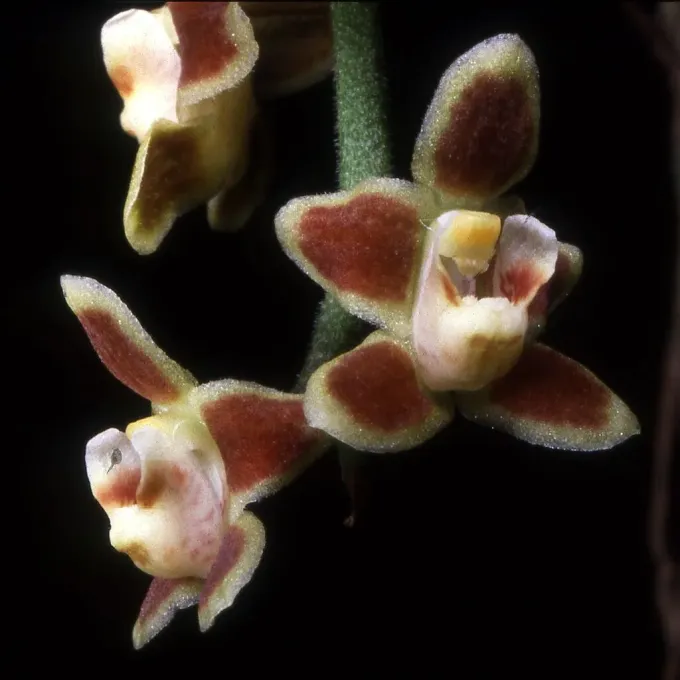
Description
Growing requirements
Chiloschista lunifera is a remarkable species belonging to the Orchidaceae family, characterized by its leafless nature. This epiphytic orchid relies entirely on its specialized green, photosynthetic roots to survive, as it lacks functional leaves throughout its life cycle.
The plant originates from the tropical regions of Southeast Asia, specifically found in the Himalayan foothills and neighboring areas. It naturally thrives on the bark of host trees, occupying a niche that requires high humidity and steady airflow to maintain its delicate physiological balance.
Successful cultivation of this species requires strict adherence to environmental parameters. The plant prefers temperatures ranging from 20°C to 28°C during the day with a significant drop at night, which is crucial for inducing blooming and maintaining plant health.
Moisture control is the most critical aspect of agrotechnical management. Humidity levels should be consistently high, between 70% and 85%, ideally maintained through misting or high-quality ultrasonic humidifiers. Good aeration is non-negotiable to ensure the roots dry out between waterings.
The preferred method of mounting is using natural cork or hardwood slabs. Growing this orchid in a potting mix is generally discouraged, as it leads to root asphyxiation and rapid rot. The roots must be exposed to air to perform gas exchange effectively.
Main diseases and pests
The most common disease threat is fungal root rot, caused by stagnant moisture or inadequate ventilation. If the roots remain wet for too long, they quickly deteriorate, leading to the collapse of the entire specimen. Proper hygiene and ensuring rapid drying are the primary preventive measures.
Pests like mealybugs and spider mites can pose a severe threat by feeding on the chlorophyll-rich roots. These infestations weaken the plant's ability to produce energy. Regular monitoring and the application of mild, organic-based horticultural oils are recommended to keep the plant free from pests.