
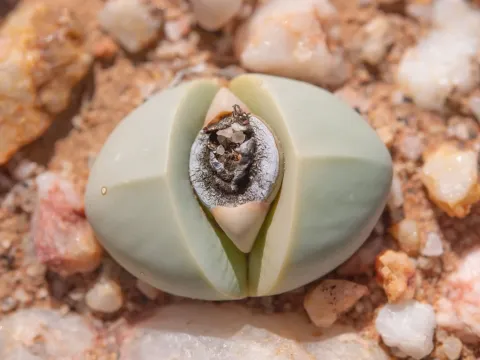
Argyroderma
Argyroderma
Argyroderma is a fascinating genus of succulent plants belonging to the Aizoaceae family. Native to the arid regions of South Africa, these plants are well-known for their unique appearance, often resembling polished stones or silver-skinned pebbles.
What the section contains
 Argyroderma congregatum
Argyroderma congregatum
Argyroderma congregatum
 Argyroderma crateriforme
Argyroderma crateriforme
Argyroderma crateriforme
 Argyroderma delaetii
Argyroderma delaetii
Argyroderma delaetii
 Argyroderma fissum
Argyroderma fissum
Argyroderma fissum
 Argyroderma framesii
Argyroderma framesii
Argyroderma framesii
 Argyroderma pearsonii
Argyroderma pearsonii
Argyroderma pearsonii
 Argyroderma ringens
Argyroderma ringens
Argyroderma ringens
 Argyroderma subalbum
Argyroderma subalbum
Argyroderma subalbum
 Argyroderma testiculare
Argyroderma testiculare
Argyroderma testiculare
Argyroderma
To cultivate Argyroderma successfully, one must provide intense, direct sunlight. These plants are heliophilic and require high light exposure to maintain their compact structure; insufficient light causes them to lose their characteristic shape and become etiolated.
The soil requirements are strict: the substrate must be highly mineral, inorganic, and fast-draining. A mixture of pumice, coarse sand, and a minimal amount of sandy loam ensures that the roots do not sit in stagnant moisture, which is lethal for this genus.
Climate control involves simulating their native desert environment. They thrive in warm conditions during the growing season but require a distinct winter dormancy period where temperatures are kept cool, typically between 10 to 12 degrees Celsius.
Watering requires a careful approach known as the soak-and-dry method. During the growth phase, water sparingly once the soil is completely dry. During dormancy, watering should be stopped almost entirely to prevent the succulent body from bursting.
The primary threat to Argyroderma is root rot caused by improper drainage and excessive watering. Once the root system is compromised, the damage to the succulent body is often irreversible, leading to quick tissue collapse.
Mealybugs are the most common pests, often hiding deep within the fissure between the leaf pairs. Their presence is marked by white, cotton-like fluff, which can be treated with targeted applications of 70% isopropyl alcohol.
Spider mites can also infest the plant in environments with poor airflow. These tiny pests cause pale, speckled discoloration on the epidermis. Maintaining good air circulation and cleaning the plant periodically helps prevent infestations.
Fungal infections can occur if the humidity levels remain too high for extended periods, especially when combined with cool temperatures. Proper ventilation and ensuring that the plant is not kept in a stagnant environment are vital preventive measures.
It is essential to check the plant regularly for any signs of softening or unusual discoloration. Early detection of pests or rot is critical for the survival of the plant, as their slow growth rate makes recovery difficult.