
Argyroderma delaetii
Argyroderma delaetii
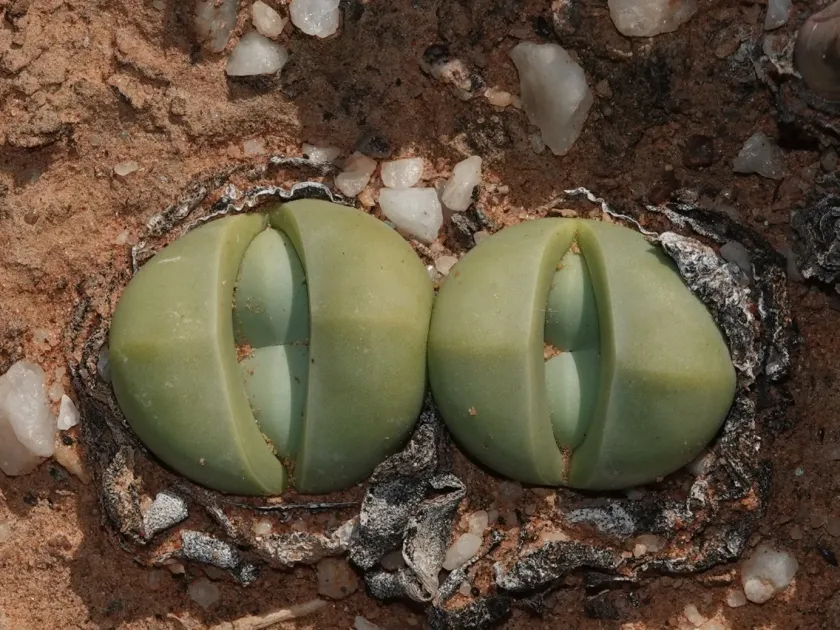
Description
Sowing dates
Propagation of Argyroderma delaetii is primarily achieved through seeds, as the plant's structural characteristics make division difficult. The best time for sowing is during the spring when daylight intensity and duration are optimal.
Use a well-draining, mineral-based substrate consisting of sand, fine gravel, and perlite. Surface sow the seeds, lightly pressing them into the growing medium, and cover the container to maintain high humidity for germination.
Seedlings typically appear within two weeks. Once they emerge, it is critical to gradually remove the cover to introduce airflow and prevent damping-off, which is a major risk for young succulents.
Growth is notably slow, and seedlings should remain undisturbed in their original container for at least the first year of life. Patience is key, as the plant needs time to establish a robust root system.
The substrate must be kept slightly moist during the first weeks but should never be soggy. Over-watering at the seedling stage is the most common cause of failure in propagation.
Growing requirements
Argyroderma delaetii belongs to the Aizoaceae family and is native to the arid regions of South Africa. It is a succulent known for its stone-like appearance, which serves as a camouflage in its natural habitat.
Full, direct sunlight is essential for this species. Without sufficient light, the plant will lose its compact shape, become etiolated, and lose its characteristic coloration, making it susceptible to rot.
The soil requirement is strict: a gritty, inorganic mixture that provides excellent drainage. Avoid any potting soil that contains high amounts of organic matter, as it retains moisture for too long.
Watering must follow a strict seasonal cycle. Water should be withheld entirely during the winter dormant season to replicate the natural drought conditions of its native environment.
Good ventilation is vital to prevent fungal issues. Placing the plant in a location with steady airflow helps to dry out the surface and maintain the health of the leaf epidermis.
Main diseases and pests
Root rot, often caused by overwatering or soil that does not drain quickly enough, is the primary threat to the health of Argyroderma delaetii. Once the roots are compromised, the plant may collapse rapidly.
Mealybugs are the most common pests, often hiding in the deep crevice between the two leaves. Manual removal or the use of specialized systemic insecticides is recommended for effective management.
Spider mites may infest the plants during periods of prolonged dry heat. They are identified by thin webbing and minute spotting on the plant surface, requiring prompt treatment with acaricides.
Splitting of the leaves occurs if the plant receives too much water suddenly after a long dry spell. These open wounds can quickly become infected by opportunistic fungi or bacteria.
- Monitor for discoloration at the base of the leaves.
- Ensure adequate drainage holes in the container.
- Maintain consistent dry conditions during dormancy.