
Argyroderma subalbum
Argyroderma subalbum
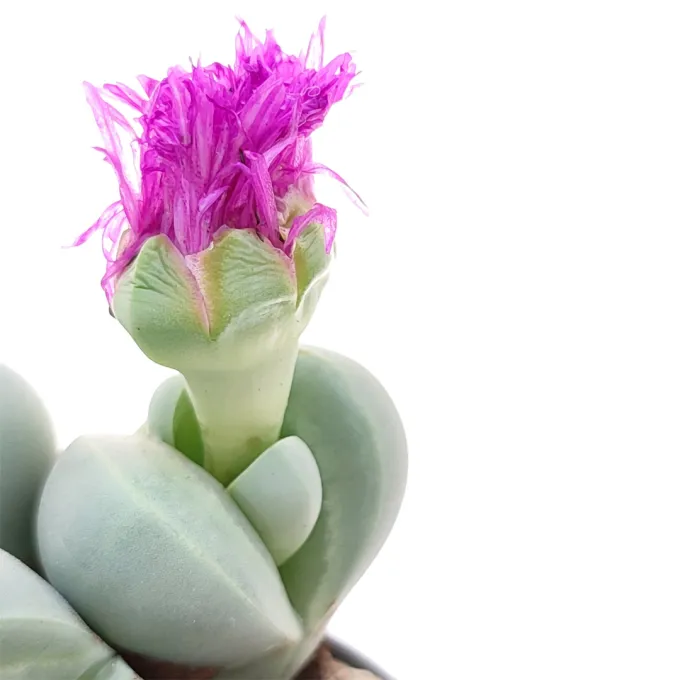
Description
Sowing dates
Propagation of Argyroderma subalbum is primarily achieved through seeds, as vegetative division is not applicable to these stone-like plants. Sowing is best performed in the early spring as daylight hours begin to increase significantly.
The seeds require a sterile, well-draining mineral substrate to germinate successfully. They should be sown on the surface and pressed slightly into the grit, avoiding deep burial which can inhibit the process.
Maintaining high humidity with a clear cover is necessary during the initial weeks, but the surface should remain damp rather than waterlogged. As seedlings appear, gradual ventilation is introduced to harden the young plants.
Growth is notably slow, and seedlings require consistent light to prevent them from becoming etiolated. It is crucial to monitor moisture levels closely, ensuring the delicate roots have enough hydration without being smothered.
Seedlings remain in their original containers for a year or longer before being moved to individual pots. This practice minimizes root disturbance, which is critical for the survival of young Argyroderma specimens.
Growing requirements
Argyroderma subalbum is a member of the Aizoaceae family, native to the arid landscapes of South Africa. It is a succulent characterized by its specialized leaf structure, which allows it to thrive in extremely dry environments.
High levels of sunlight are mandatory for this plant; it requires intense light to maintain its compact, "stone-like" growth habit. Inadequate light results in weak, elongated leaves that are highly susceptible to decay.
The soil must be inorganic and fast-draining, consisting mainly of crushed rock, coarse sand, and perlite. A heavy, organic-rich soil will retain too much moisture, inevitably leading to the death of the root system.
Watering requires strict discipline: wait until the soil is completely dry before providing a small amount of water. During the dormant winter period, watering should be stopped almost entirely to match the plant's natural cycle.
Optimal growth temperatures range from 22 to 28 degrees Celsius during the active season. During the winter, the plant benefits from a cool rest period between 10 and 15 degrees, which mimics its natural seasonal rhythm.
Main diseases and pests
Overwatering remains the primary threat to the health of Argyroderma subalbum. Excess moisture in the soil or trapped between leaf lobes causes rapid tissue rot, which is usually irreversible once it reaches the core.
Mealybugs are the most common pests, often hiding in the crevices between the fleshy leaves. If an infestation is detected, physical removal or appropriate systemic insecticides should be applied to prevent further damage.
Poor ventilation combined with high humidity can lead to fungal infections. These often manifest as discolored spots on the skin of the plant, indicating that the immediate environment needs to be drier and better aerated.
During the dormant season, the plant is particularly sensitive to cold drafts and excessive moisture, which can cause internal damage. Protection from sudden temperature drops is essential for the plant's long-term health.
Using improper fertilizers, particularly those high in nitrogen, can cause forced growth, resulting in soft tissues that are easily attacked by pests. It is best to stick to low-concentration fertilizers specifically designed for succulents.