
Argyroderma pearsonii
Argyroderma pearsonii
Description
Growing requirements
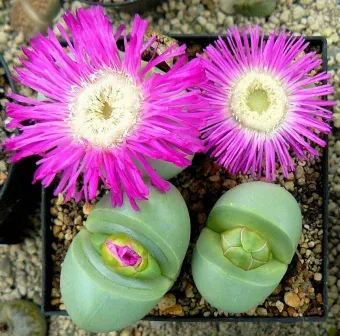
Argyroderma pearsonii is a distinct succulent species belonging to the Aizoaceae family. Native to the arid regions of South Africa, it is known for its remarkable ability to thrive in extremely dry and rocky environments, often blending in with surrounding stones.
Botanically, this plant is characterized by its succulent, stone-like leaves that grow in compact pairs. These leaves are covered with a smooth cuticle, which serves as a protective layer against high solar radiation and moisture loss in its native arid habitat.
Successful cultivation requires strict adherence to environmental conditions. It demands high levels of sunlight, excellent airflow, and a highly porous growing medium. A mixture of gravel, pumice, and coarse sand is ideal to ensure rapid drainage and prevent water accumulation.
In terms of agricultural management, watering should be strictly regulated. The plant undergoes a natural dormancy period, during which irrigation should be almost entirely withheld. Overwatering is the most common cause of failure for growers of this species.
Argyroderma pearsonii is primarily used in specialized horticulture and succulent collections. Due to its slow growth rate and specific environmental needs, it is considered a prized specimen among plant enthusiasts and botanic garden displays.
Main diseases and pests
The primary threat to the health of Argyroderma pearsonii is root rot caused by stagnant moisture. Because the plant is adapted to drought, any excessive hydration quickly disrupts its biological processes and leads to rapid tissue breakdown.
Common pests include mealybugs and spider mites, which can easily hide in the crevice between the leaf pairs. Regular inspection is necessary, and any intervention must be handled with care, using only succulent-safe pesticides to avoid damaging the plant's surface.
Improper lighting conditions often cause etiolation, where the plant grows unnaturally elongated. This structural change compromises its resilience and makes it more susceptible to further damage or infections from opportunistic pathogens.
Fungal pathogens represent a significant risk, particularly during periods of high humidity combined with low airflow. Preventive measures include maintaining a dry environment and ensuring the growing substrate is completely free of organic contaminants.
- Root rot due to overwatering.
- Mealybug infestations in leaf gaps.
- Etiolation caused by low light levels.
- Fungal infections from high humidity.
- Soil salt accumulation affecting nutrient uptake.