
Argyroderma crateriforme
Argyroderma crateriforme
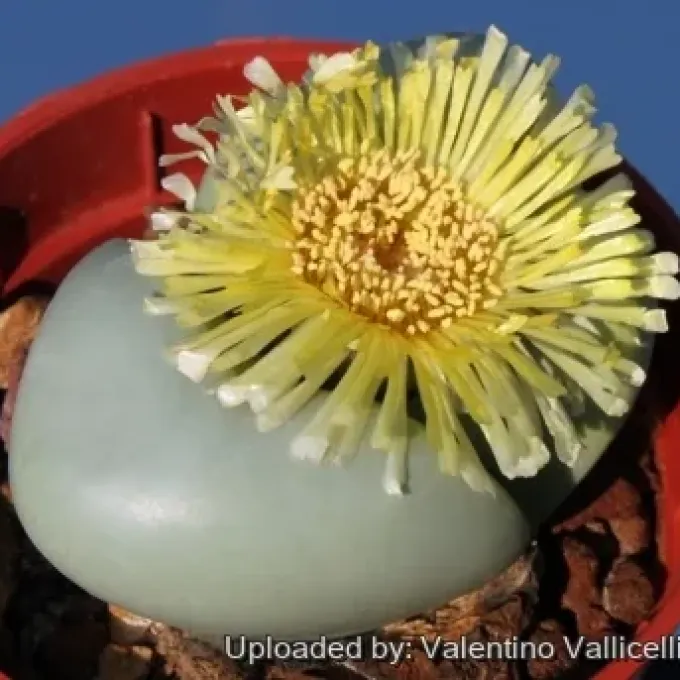
Description
Sowing dates
Sowing seeds of Argyroderma crateriforme should be performed in the spring when natural daylight hours begin to increase significantly. This provides the best conditions for germination.
Use a well-draining, mineral-based substrate for sowing. Sand mixed with grit is ideal for ensuring that seedlings have adequate support and perfect water management from the start.
Seeds should be placed on the surface of the soil and lightly pressed down without burying them. High humidity is required initially, which can be maintained by covering the tray.
Keep the environment at a temperature range of 20 to 25 degrees Celsius. Consistent warmth is vital for the biological process of germination in these species.
Once seedlings emerge, introduce fresh air gradually. Developing a robust root system is the main goal during the first few months of the plant's life cycle.
Growing requirements
Argyroderma crateriforme is a succulent belonging to the Aizoaceae family, native to the arid regions of South Africa. It is adapted to extreme environmental conditions.
Bright, direct sunlight is a fundamental requirement for this plant. Without sufficient light, the plant will lose its compact shape and will fail to bloom properly.
The potting medium must be extremely porous. A mixture of pumice, sand, and a small amount of inorganic soil ensures that no water remains stagnant around the roots.
Watering must be strictly seasonal. During the growth phase, water only when the substrate is completely dry. In the winter dormancy period, water should be withheld entirely.
This succulent thrives in high summer heat but requires a cool, dry winter period to initiate its dormant cycle. Good ventilation is essential at all times to prevent rot.
Main diseases and pests
Overwatering is the primary cause of plant death. Constant moisture leads to root decay, which is often irreversible due to the succulent's sensitive nature.
Mealybugs are the most common pests, often hiding in the crevices between the leaves. Regular inspection of the plant body is necessary for early detection and control.
Poor air circulation increases the risk of fungal infections, particularly when the atmosphere is humid. Maintaining a dry environment significantly reduces this risk.
Root aphids can also be an issue if the soil quality is poor. Using sterile components in the potting mix helps prevent the introduction of these underground pests.
Always avoid getting water on the leaves when the plant is in a state of dormancy. Splashing water can cause unsightly spotting or trigger rotting in weak specimens.