
Argyroderma congregatum
Argyroderma congregatum
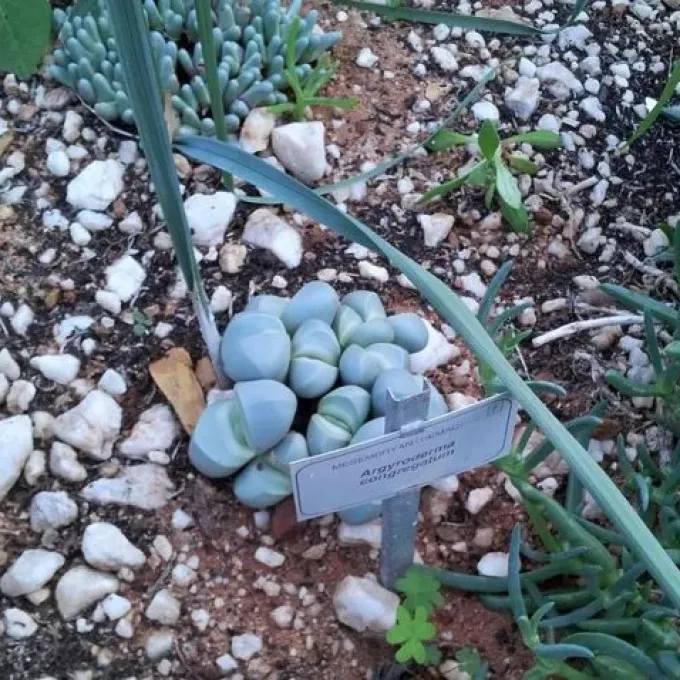
Description
Growing requirements
Argyroderma congregatum is a rare dwarf succulent species belonging to the Aizoaceae family. It is native to the arid regions of South Africa, specifically within the succulent-rich areas of the Western Cape, where it has evolved to thrive in specialized environmental niches.
The plant is characterized by its compact, succulent leaves that form a cluster, mimicking the appearance of surrounding pebbles. This adaptation is crucial for surviving extreme heat and long periods of drought, which are common in its natural habitat.
For successful cultivation, the plant requires an extremely bright and sunny environment. It is essential to ensure adequate airflow, which helps regulate the temperature of the succulent tissues and prevents the development of physiological disorders during the growing season.
The growing medium must be highly inorganic and porous, composed mainly of grit, sand, and perlite. A heavy or peat-based soil mix will invariably lead to the death of the plant due to root rot caused by poor drainage and excessive moisture retention.
Argyroderma congregatum is valued primarily as a collector's plant for horticultural enthusiasts. It is not an agricultural crop in the traditional sense, but it is highly sought after for xeriscaping displays and specialized indoor succulent collections due to its distinct aesthetics.
Main diseases and pests
Fungal pathogens and bacterial rot pose the most significant threat to this species, primarily triggered by overwatering during the dormant winter phase. If the soil remains damp for too long, the tissues collapse rapidly, making the plant difficult to save.
- Root mealybugs residing in the soil.
- Red spider mites during periods of extreme aridity.
- Fungal wilting due to poor ventilation.
Prevention involves strict adherence to a dry dormancy period and the use of well-ventilated containers. Routine monitoring of the leaf surface and root zone is recommended to ensure early detection of any physiological or pathological stress factors.