
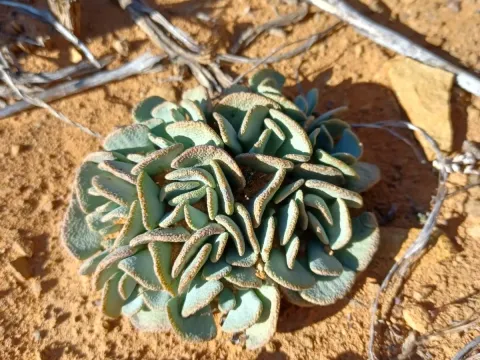
Aloinopsis
Aloinopsis
Aloinopsis is a genus of small, succulent perennial plants belonging to the Aizoaceae family. Native to the arid regions of South Africa, these plants have evolved to survive in harsh conditions by developing thickened, tuberous root systems that store water during extended droughts.
What the section contains


Aloinopsis
Botanically, these plants are known for their rosettes of fleshy leaves, which often display unique surface textures, such as tubercles or translucent windows. These features allow the plant to regulate water loss and optimize photosynthesis in intense sunlight environments.
To cultivate Aloinopsis successfully, providing full sunlight is the most critical requirement. These succulents are adapted to high irradiance and will etiolate rapidly if kept in shaded conditions, losing their compact growth habit and natural resilience.
The growing medium must be highly inorganic and porous to prevent root rot. A professional succulent mix typically consists of coarse sand, perlite, pumice, and a minimal amount of organic matter. Excellent drainage is essential, as waterlogging is the primary cause of failure.
Climate management requires a strict dormancy period during the winter months. During this phase, the plant should be kept in a cool, bright location with very little to no water, simulating the natural dry season of its native habitat to ensure successful spring flowering.
Root rot is the most significant threat to Aloinopsis, typically caused by improper watering techniques or heavy, water-retaining soils. Once the root system begins to decay, the succulent can rapidly succumb to fungal pathogens.
Mealybugs are the most common pests found on Aloinopsis, usually clustering in the crevices between leaves. Their presence can be identified by a white, cottony substance, and they significantly hinder the plant's growth by feeding on its sap.
Spider mites represent another risk, particularly in environments with low humidity and high temperatures. These pests damage the leaf surface, creating a stippled, discolored appearance that detracts from the plant's ornamental value.
Managing these threats involves the judicious application of systemic insecticides and acaricides. It is vital to perform spot tests on a small portion of the plant before applying any chemicals to avoid damaging the sensitive succulent epidermis.
Proactive care, including consistent air circulation and ensuring the substrate dries out completely between waterings, remains the best defense against both pests and fungal diseases in a collection of succulents.