
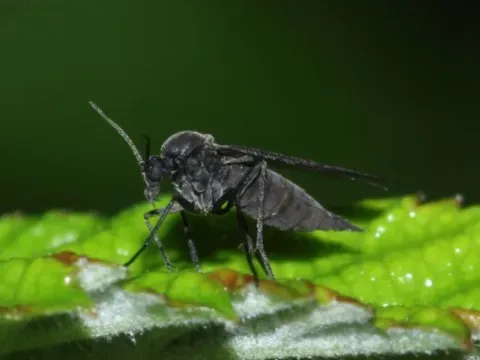
Fungus gnat
Bradysia
The fungus gnat (Bradysia) is a small fly belonging to the Sciaridae family, commonly found in damp soil and greenhouse environments. Adults measure 2–4 mm in length with delicate, dark-colored bodies.
What the section contains
Fungus gnat
The life cycle of the pest consists of four distinct stages: egg, larva, pupa, and adult. While adults are essentially harmless, the larval stage is responsible for the damage to plant roots.
Larvae appear as small, translucent, legless worms with a shiny black head capsule. They typically thrive in moist, organic-rich media like peat, feeding on fungi, decaying organic matter, and plant roots.
Under optimal conditions (20–25°C), the entire development cycle can take as little as 3 to 4 weeks, allowing populations to explode if conditions are left unchecked.
Females lay hundreds of eggs in the moist soil surface, ensuring that multiple generations can overlap throughout the year in indoor or greenhouse settings.
Fungus gnats primarily affect young seedlings, cuttings, and plants with underdeveloped or stressed root systems. The larvae consume root hairs, which impairs the plant's nutrient uptake.
Damage often manifests as stunted growth, yellowing foliage, and a general lack of vigor in the affected plants. If left untreated, the damage can lead to root rot and total plant collapse.
These pests serve as vectors for soil-borne pathogens including Fusarium, Pythium, and Botrytis, introducing these diseases into the wounded root tissues during feeding.
Greenhouse crops growing in peat-based substrates are at the highest risk, as these environments provide the moisture and food source necessary for larval development.
Even if the damage is not immediately lethal, the stress caused by the gnats significantly lowers the plant's resistance to other environmental stresses and opportunistic infections.
Fungus gnats are present year-round in indoor and greenhouse environments. They are especially problematic during the winter months when light levels are low and soil dries slowly.
High soil moisture is the primary driver of their seasonal activity. In greenhouses, irrigation practices during cool, cloudy weather often create perfect conditions for mass outbreaks.
Spring is a high-risk period for nurseries, as young, tender seedlings provide abundant resources for the larvae, potentially devastating entire batches of new crops.
Indoor plant enthusiasts often face these pests during winter when indoor heating is on but humidity remains high around the pots, providing a stable microclimate for the pests.
Constant monitoring is required because once established in a greenhouse or indoor space, the gnats can complete their life cycle indefinitely without a distinct seasonal break.
The most obvious sign of an infestation is the presence of small, dark flies buzzing around the plants or crawling on the surface of the soil when disturbed by watering.
Plants showing unexplained wilting, loss of turgor, or yellowing leaves despite adequate irrigation are often suffering from root damage caused by larvae.
Closer inspection of the soil surface immediately after watering may reveal the translucent larvae squirming in the top layer of the damp growing medium.
The soil surface might also show signs of disturbance, or the presence of fungi and algae, which act as secondary food sources for the larvae, signaling an ideal habitat.
- Small dark flies flying above pots.
- Wilted plants despite regular watering.
- Larvae visible on the soil surface.
- Sudden decline in plant vigor.
The most effective cultural control is to manage irrigation carefully. Allowing the top 2–3 cm of the soil to dry completely between waterings inhibits larval development.
Yellow sticky traps placed horizontally near the soil surface are highly effective at capturing adult females, thereby breaking the reproductive cycle.
Biological controls such as beneficial nematodes (Steinernema feltiae) or biological insecticides (Bacillus thuringiensis israelensis) are excellent for targeting larvae in the soil.
Chemical control using systemic insecticides or soil drenches may be necessary for severe infestations, provided that manufacturer instructions are strictly followed.
Adding a layer of sand or gravel to the soil surface acts as a physical barrier, preventing adult gnats from laying eggs in the moist growing medium below.