
Sciarid
Bradysia impatiens
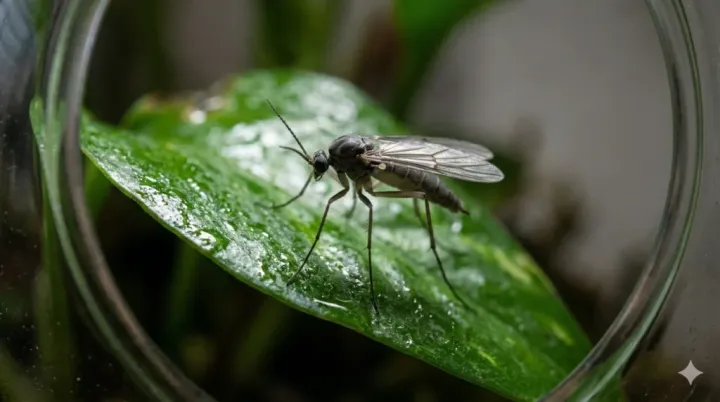
Description
How to identify
The sciarid, commonly known as the fungus gnat, belongs to the family Sciaridae within the order Diptera. These are tiny flies often found in greenhouses, nurseries, and indoor plant collections.
Adult fungus gnats are delicate insects with black or dark grey bodies and a wingspan of about 3 to 4 mm. They are weak fliers and are often seen scurrying across the surface of the soil.
The larvae are the destructive stage of the life cycle. They are legless, white, worm-like creatures reaching 5-7 mm in length, characterized by a shiny, distinct black head capsule.
The entire life cycle occurs rapidly, typically lasting 3 to 4 weeks depending on the temperature. Higher temperatures and humidity significantly accelerate the development of each generation.
Females lay their eggs primarily in the upper layer of moist, organic-rich potting medium. A single female can produce up to 300 eggs during her short adult lifespan.
What it damages
Sciarids impact a wide range of plants, including greenhouse vegetable transplants, floral crops, and common houseplants. Young seedlings are at the highest risk of catastrophic damage.
While larvae primarily consume decaying organic matter, they will turn to healthy plant tissues when populations are dense. They gnaw on roots and root hairs, depriving the plant of nutrients.
Wounds created by larvae serve as infection points for soil-borne pathogens like Pythium and Fusarium. This secondary infection often leads to rapid plant wilting and total collapse.
Severe infestations can destroy the root systems of cuttings and seedlings completely. This results in significant economic loss for professional growers and frustration for home gardeners.
Plants affected by sciarid larvae may show stunted growth, chlorosis, and general unthriftiness, even when provided with optimal light, water, and fertilizer conditions.
Signs of infestation
The most obvious sign of an infestation is the presence of small, black flies darting around the plant pots. They are particularly active after the pots are disturbed or watered.
Close inspection of the soil surface may reveal the presence of translucent larvae. They are sensitive to light and will quickly retreat into the soil if disturbed by cultivation.
Sudden wilting of plants in pots that appear sufficiently watered is a major red flag. This indicates the root system has been compromised and can no longer transport moisture upward.
Yellow sticky cards are the gold standard for monitoring adult fungus gnat populations. High counts on these cards indicate that a breeding population is active in the vicinity.
In advanced cases, the soil may emit a foul odor, and small seedlings may topple over as their stems are severed at the soil line by the feeding larvae.
Control measures
The first line of defense is proper irrigation management. Allowing the top 1-2 inches of potting mix to dry out completely between waterings is often enough to break the pest cycle.
Yellow sticky traps are highly effective for capturing adult gnats. By removing the adults, you prevent them from laying more eggs and stop the infestation from growing.
Biological control agents, specifically entomopathogenic nematodes such as Steinernema feltiae, are highly effective when applied as a soil drench to target larvae directly.
For chemical control, products containing systemic insecticides or insect growth regulators can be applied to the soil. Always verify the compatibility of these products with your specific plant species.
Preventative measures include using sterile potting media and avoiding organic fertilizers that have not been fully composted. These simple steps create a hostile environment for the sciarids.
Taxonomy
- Latin name
- Bradysia impatiens
- Order
- Diptera (flies)
- Family
- Sciaridae
- EPPO code
- BRAIIM
Discussion
No discussions yet — be the first.