
Sciarid fly
Lycoriella
Description
How to identify
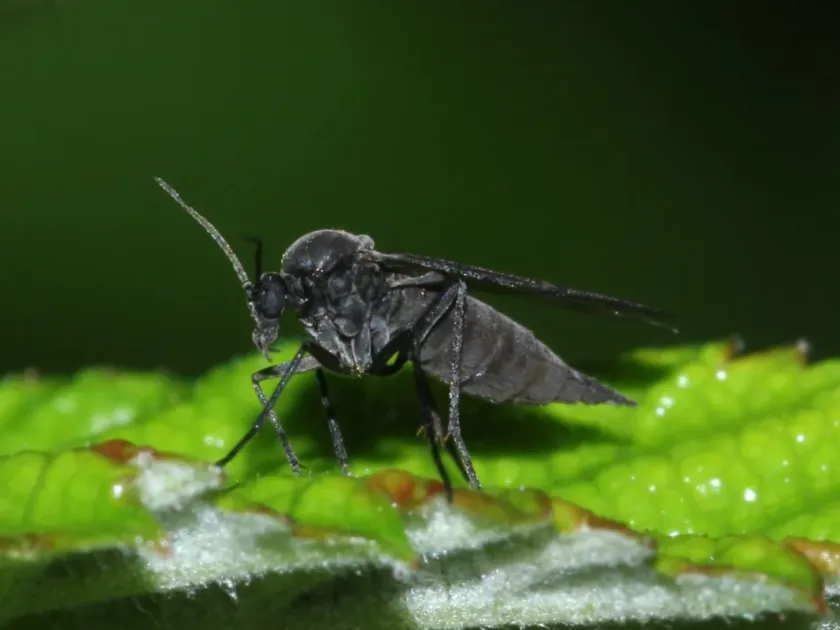
The sciarid fly (Lycoriella), commonly known as the fungus gnat, belongs to the family Sciaridae. Adult flies are small, delicate insects with dark bodies, long legs, and a characteristic V-shaped wing venation.
The larvae are the primary stage of concern for growers. They are translucent, legless, and white or creamy-white in color, with a distinctive shiny black head capsule that is easily visible under magnification.
These insects thrive in moist environments rich in organic matter. Their life cycle is rapid, often completing in just under a month in warm, greenhouse conditions, leading to overlapping generations throughout the year.
Adults are weak fliers and are often found hovering around the base of plants or resting on the surface of damp potting soil or compost.
Each female can lay scores of eggs in the top layers of soil, where moisture levels are high, ensuring a quick population explosion if conditions remain favorable.
What it damages
Larvae primarily feed on organic debris, but when populations are high, they shift to feeding on plant roots and root hairs. This feeding behavior causes significant damage to seedlings and young cuttings.
The destruction of the root system stunts plant growth, leads to yellowing of leaves, and makes the plant susceptible to secondary infections like damping-off or root rots.
In mushroom cultivation, Lycoriella is a notorious pest. Larvae tunnel through the fruit bodies, rendering the mushrooms unmarketable and significantly reducing crop yields.
Besides direct damage, these flies act as vectors for various plant pathogens, carrying fungal spores (such as Pythium or Fusarium) on their bodies from infested soil to healthy plants.
Seedlings, especially those in seed trays or nursery pots, are highly vulnerable, as even minor root damage at the early stages of growth can result in total plant loss.
Signs of infestation
The most obvious sign of an infestation is the presence of small, dark flies fluttering around plants or across the surface of the soil, especially after watering or movement.
Yellow sticky cards are highly effective monitoring tools. Placing them horizontally or vertically just above the soil level will capture the adults and indicate the severity of the infestation.
Affected plants often show a sudden loss of vigor and may wilt despite the soil being moist. This is a classic symptom of compromised root systems.
Inspecting the soil surface might reveal larvae moving through the top layers. Their movement is usually quick and erratic when exposed to direct light.
In cases of severe infestation, one might notice small exit holes on the stems of young plants at the soil line, or decaying organic material on the surface that appears "churned" by larval activity.
Control measures
Cultural control is the first line of defense. Allow the surface of the potting soil to dry out between waterings, as fungus gnat eggs and larvae require consistent moisture to survive.
Biological controls such as beneficial nematodes (e.g., Steinernema feltiae) are highly effective when applied to the soil. They actively hunt and parasitize the larvae, providing an eco-friendly solution.
For chemical management, targeted soil drenches with appropriate insecticides can reduce larval populations, while aerial sprays or fogging can help manage adult fly numbers.
Sanitation is key to preventing re-infestation. Clean up debris, remove stagnant water from trays, and ensure that only sterile, high-quality potting media is used in the nursery.
- Regular monitoring with yellow sticky cards;
- Avoiding over-irrigation of crops;
- Using sterilized growing media;
- Applying entomopathogenic nematodes;
- Maintaining proper greenhouse hygiene.
Taxonomy
- Latin name
- Lycoriella
- Order
- Diptera (flies)
- Family
- Sciaridae
- EPPO code
- LYCLSP
Discussion
No discussions yet — be the first.