
Fungus gnat
Bradysia agrestis
Description
How to identify
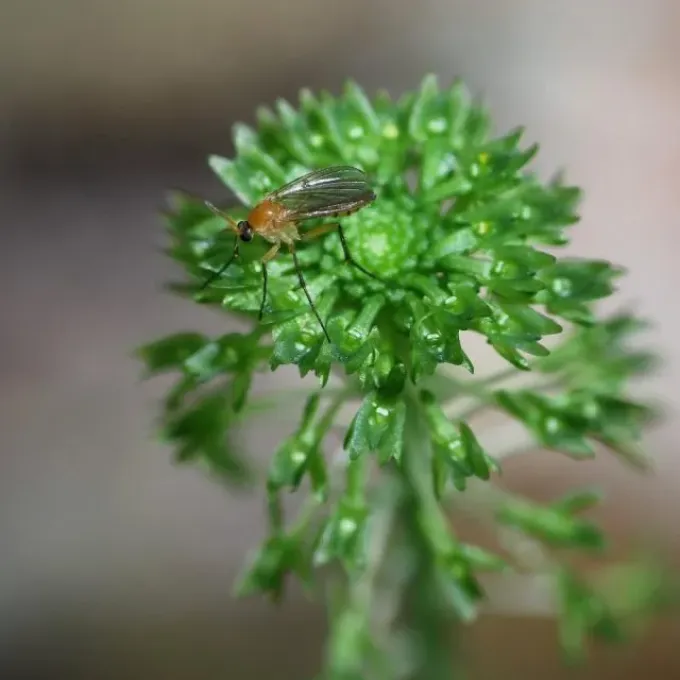
The fungus gnat (scientific name Bradysia agrestis) belongs to the Sciaridae family. Adult flies are small, 3–4 mm long, with slender bodies, long legs, and dark-colored wings.
The larval stage is the most significant. Larvae are slender, legless, 5–7 mm long, and have a distinct, shiny black head capsule that makes them easy to recognize.
Fungus gnats are typically found in moist environments. They thrive in damp potting soil, organic compost, and greenhouses with high humidity levels.
Their life cycle consists of egg, four larval stages, pupa, and adult. Under ideal conditions (about 24°C), a full generation can develop in just three to four weeks.
Females lay hundreds of eggs in the upper layers of the soil, ensuring that the next generation of larvae is ready to feed immediately upon hatching.
What it damages
While larvae primarily feed on decaying organic matter and fungi, they will attack living roots of seedlings, cuttings, and younger houseplants when food is scarce.
Root damage caused by larvae disrupts the plant's ability to uptake water and nutrients, resulting in stunted growth, yellowing foliage, and potentially plant death.
Adult gnats act as vectors for various plant pathogens. They can carry fungal spores, bacteria, and viruses from one plant to another within the same area.
Seedlings are particularly vulnerable; a heavy infestation can cause mass mortality in seed trays due to the destruction of delicate root systems.
Plants grown in hydroponic systems are also susceptible, as the moist medium provides an ideal habitat for both adults and larvae to multiply rapidly.
Signs of infestation
The most recognizable sign is the presence of small, dark flies hovering around the soil surface or resting on leaves near the base of the plant.
Plants start to show signs of stress, such as wilting or sudden chlorosis, even when the moisture levels in the soil are maintained at an appropriate level.
Observing larvae is possible by carefully inspecting the top centimeter of the potting mix, especially after a fresh watering cycle.
Yellow sticky traps placed near the plant pots will capture adults, providing a clear visual indicator of the infestation severity.
Thinning of the plant growth or "leggy" seedlings often indicates that the root system has been compromised by larval feeding activity.
Control measures
The primary control method is cultural: avoid overwatering. Allowing the top layer of soil to dry out significantly disrupts the life cycle of the gnats.
Improve drainage in pots and ensure that no standing water remains in saucers, as this is a primary breeding site for the larvae.
Apply yellow sticky cards to catch adults and prevent them from laying more eggs in the potting medium.
For chemical control, soil drenches using approved insecticides can effectively eliminate larvae living within the root zone.
Biological controls, such as beneficial nematodes (Steinernema feltiae) or biological pesticides containing Bacillus thuringiensis israelensis, are highly effective options.
Taxonomy
- Latin name
- Bradysia agrestis
- Order
- Diptera (flies)
- Family
- Sciaridae
- EPPO code
- BRAIAG
Discussion
No discussions yet — be the first.